The latest News and Information on Monitoring for Websites, Applications, APIs, Infrastructure, and other technologies.
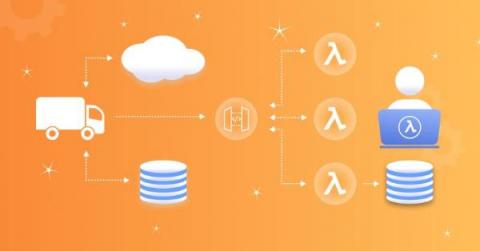
SAN FRANCISCO — August 23, 2022 – InfluxData, creator of the leading time series platform InfluxDB, today announced new serverless capabilities to expedite time series data collection, processing, and storage in InfluxDB Cloud. InfluxDB Native Collectors enable developers building with InfluxDB Cloud to subscribe to, process, transform, and store real-time data from messaging and other public and private brokers and queues with a click of a button.
Streaming time series data from brokers and services that are on-premises or in the cloud to a cloud-based database is a resource-intensive process requiring third-party software and heavy customizations. Today we’re announcing InfluxDB Native Collectors to make it easy for developers to collect, process, and analyze data by subscribing directly to supported message brokers.
In the quest for business transformation and digital modernization, organizations have rapidly adopted devops frameworks, microservice architectures, serverless technologies, and containerized infrastructures. However, they have realized that legacy tools cannot adequately address the newer security and monitoring challenges associated with modernization. Sysdig’s mission is to make every cloud platform secure and reliable from source to run.
Welcome to another month of What’s New in Sysdig in 2022! I’m Joshua Ma, a Customer Solutions Engineer based out of sunny Los Angeles. I joined the Customer Success team at Sysdig five months ago. After having my first taste of K8s, containers, and Falco at the North America KubeCon/CloudNativeCon in 2019, I haven’t looked back since!
Azure Advisor analyzes your configurations and usage telemetry and offers personalized, actionable recommendations to help you optimize your Azure resources for reliability, security, operational excellence, performance, and cost. Azure Advisor is a free service and can be accessed via the GUI on the Azure portal where recommendations are collated and can be manually examined. Azure Advisor makes recommendations for potential improvements in several areas, including.
You’ve probably seen Rush Hour, a logic puzzle where you have to slide cars and trucks out of the way to steer the red car towards the exit. In real life, when your customers are responsible for tracking hundreds or thousands of data points from dozens of valuable, mission-critical sensors, you’re tracking engine speed, network signal level, distance from the RF, and more—and not just through traffic but across continents.
The best part of my job is talking with prospects and customers about their logging and data practices while explaining how Cribl focuses on getting more value from observability data. I love to talk about everything they are doing and hope to accomplish so I can get a sense of the end state. That is vital to developing solutions that provide overall value across the enterprise and not just a narrow tactical win with limited impact.
gRPC is an open-source Remote Procedure Call (RPC) framework developed by Google and released in 2016. Although gRPC is still relatively new, large organizations are adopting it in increasing numbers to build APIs that connect complex microservice meshes that use disparate languages and frameworks. gRPC-based APIs can perform requests up to seven times faster than REST APIs and enable customers to easily implement SSL authentication, load balancing, and tracing via plug-in libraries.