Operations | Monitoring | ITSM | DevOps | Cloud

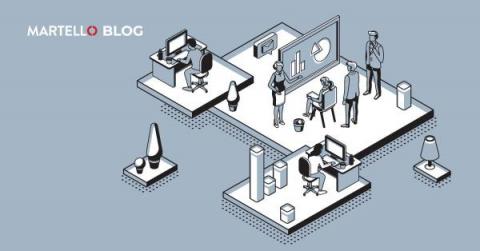
Reimagining the Modern Workplace Post-Pandemic

You’re probably bored with talking about Covid – we certainly are. But something that we still find interesting is that in the modern workplace, how people now interact with one another, how they work together and the communication tools that they use play a critical role in boosting their overall productivity. Because of the pandemic, many of us now split our time working between the home and the office – so how can we reimagine the modern workplace to get the most out of it?
7 ways teams are using incident.io's Decision Flows

One of my favourite features in incident.io is Decision Flows. With it, you can create a series of questions which eventually lead to a decision based on what you’ve answered. You can pull up this flow during an incident and it’ll guide you through the questions. It’s like having an experienced on-caller calmly guide you through what to do when a crisis hits. This is complementary to incident.io’s Workflows feature.

Grafana and Cilium: Deep eBPF-powered observability for Kubernetes and cloud native infrastructure

Today, Grafana Labs announced a strategic partnership with Isovalent, the creators of Cilium, to make it easy for platform and application teams to gain deep insights into the connectivity, security, and performance of the applications running on Kubernetes by leveraging the Grafana open source observability stack.

Getting started with Civo Academy

Here at Civo, we have created over 50 free video guides and tutorials to help you navigate Kubernetes: from understanding the basic need for and function of containers, to launching and scaling your first clusters. You can start learning everything you need to know to get started with Kubernetes today with our nine modules which were created by in-house experts at Civo!

Puppet supports DoD continuous compliance and configuration management

Puppet Enterprise now offers Compliance Enforcement Modules aligned to DISA STIGs Benchmarks. The Defense Information Systems Agency (DISA) Security Technical Implementation Guides (STIGs) were built to safeguard our most critical security systems and data against a dynamic threat environment, yet monitoring and enforcing widely deployed infrastructure at the U.S. Department of Defense (DoD) scale is a formidable task.

Import Datadog Traces Into Honeycomb

Getting existing telemetry into Honeycomb just got easier! With the release of the Datadog APM Receiver, you can send your Datadog traces to the OpenTelemetry Collector, and from there, to any OpenTelemetry-compatible endpoint. Often, evaluating a new tracing solution requires re-instrumenting your applications from the ground up in a new vendor’s tooling. It’s a pretty high bar to clear just to see if a solution is worth adopting.

How To Build A Case For Your Cloud Cost Optimization Opportunity

Identifying great business optimization opportunities is tougher than it seems. You often need to weigh the projected revenue and costs of taking a new path against the potential opportunity costs of not taking that path. Not only is this an apples-to-oranges comparison, but also a “what if” scenario riddled with variables. For instance, what if slashing costs makes the customer experience so much slower and more frustrating that sales decline and you wind up losing revenue?

Bring Efficiency to Log Management in DigitalOcean

The ongoing partnership between Papertrail and DigitalOcean led to the development of the Papertrail software as a service (SaaS) add-on in the DigitalOcean Marketplace. With the add-on, developers can add powerful, simple, and scalable Papertrail log management to their DigitalOcean infrastructure in seconds. In two earlier posts, we reviewed how the add-on helps teams simplify and centralize log management.

3 Ways You Might Have an NOC Process Hangover

NOC, or network operation center, processes have been set in stone for decades. But it’s time for some of these processes to evolve. Digital transformation and the cloud era have led to the rise of DevOps, and with it, service ownership. Service ownership means that developers take responsibility for supporting the software they deliver at every stage of the life cycle. This brings development teams closer to their customers, the business, and the value they deliver.