Operations | Monitoring | ITSM | DevOps | Cloud

The latest News and Information on DevOps, CI/CD, Automation and related technologies.

Shipped: Cost alerts in the Google Chat space where your team already works

If your company runs on Google Workspace, your team lives in Google Chat. That is where the standup happens and where threads turn into decisions. Cost alerts can now go there too. This is relevant because an alert only does something if it reaches people in a place where they can talk about it. Email is great for a record but not great for a reaction. An anomaly notification sitting in an inbox waits for that person to open it, decide it is real, and then go tell everybody else.
[WEBINAR] Codifying Tribal Knowledge - How to Build Long Term Memory for AI SRE Agents

In this technical webinar, Komodor’s engineering team unveils Agent Memory – the long-term operational memory behind our AI SRE agents. We’ll go deep into how it works: why we modeled it on human memory research (episodic vs. semantic, consolidation, reinforcement, decay), why off-the-shelf memory frameworks like Mem0 and Graphiti fell short for SRE workloads, and how we built a fast, purpose-built alternative on PostgreSQL and pgvector – one table, three search indexes, and a hybrid retrieval engine that fuses exact, lexical, and semantic search into a single ranked answer.

NIST Security Best Practices for Telemetry Data: How to Implement and Automate Them

NIST security best practices for telemetry data treat logs as governed records. Every record has required content, a protection requirement, and a retention period. Eight practices cover the decisions involved, from what you collect through to how you document each filter. No single standard from the National Institute of Standards and Technology covers telemetry. The requirements sit across a controls catalog, a planning guide, and a framework.

Why London's tech community should care about AI, cloud and digital sovereignty in 2026

London has spent decades establishing itself as one of the world’s major technology hubs. Its strength comes from the concentration of AI and technology startups, financial services and fintech, highly regulated industries, universities and research institutions, international businesses and technology companies, alongside a large community of developers and engineers.

Inside the Live Launch: What We Showed for GitKraken Insights for Developers and Kepler

We hosted a live launch preview, “Level Up Your Agentic Workflow,” to introduce two things at once: GitKraken Insights for Developers and Kepler. Jeremy Castile, our VP of Developer Research, opened with research on how teams are actually using AI agents today. If you want the full breakdown of that data, including the adoption numbers and the gap between feeling faster and proving it, we published it separately in State of AI in Engineering 2026: The Proof Gap.

You don't know what your model is going to do when you tell it what to do.

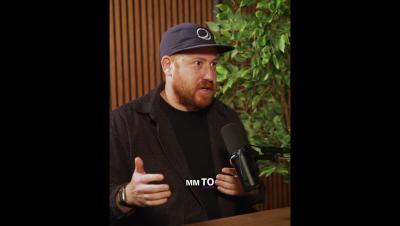
Give a model permission to act on your computer and you're trusting it will behave the way you expect. It might not. In this clip from our Braintrust conversation, Adam Berman, engineering leader at Semgrep, breaks down why a backdoored model is a different threat model than backdoored software. You can't fuzz-test your way to finding it, and you often can't detect it until it's already acting the way it shouldn't.

Minga's developers point AI tools at their own infrastructure

Matt Zytaruk, VP of Technology at Minga, on what changed once his developers could point their AI tools at their own infrastructure. Minga checks in 1.5 million students across the eastern seaboard every school morning. They run that platform on Control Plane, which gives their team an MCP server, a CLI, and Terraform-native resources — so a developer can investigate an issue and generate the code for the change without waiting on anyone.