Operations | Monitoring | ITSM | DevOps | Cloud

The latest News and Information on DevOps, CI/CD, Automation and related technologies.

AI writes code in seconds, but delivery still takes days

The pitch for AI coding was speed. Claude Code, Copilot, Cursor, whatever you’re running, they all generate business logic faster than you can review it. That part is real. But look at what happens after the code gets written and the numbers get ugly. CircleCI’s 2026 State of Software Delivery Report found AI drove a 59% increase in average throughput.

Top Security Data Pipeline Platforms in 2026: The Comprehensive Guide

The security data pipeline platform has become the most strategically important layer in the modern SOC, and in the last twelve months, the largest security vendors have paid to own it. CrowdStrike acquired Onum for $290 million, SentinelOne acquired Observo AI for $225 million, and Palo Alto Networks acquired Chronosphere for $3.35 billion. The layer that sits between your data sources and your security tools now decides what every downstream tool receives, at what cost, and in what shape.

Application monitoring tools in 2026: APM, observability, and AI monitoring compared

Application monitoring tools track your application's health, speed, errors, and resource usage in real time. Also called APM tools or application performance monitoring software, these tools are essential for any team running production workloads. The leading options in 2026 are Datadog, New Relic, Dynatrace, Grafana, and Elastic APM for traditional workloads, plus Arize AI, LangSmith, and Weights & Biases for AI observability.

How to Migrate Terraform State Between Backends

Terraform state doesn't stay put forever. Teams outgrow local state files, consolidate multiple backends into one, switch cloud providers, or decide it's time to move off a platform that's no longer working for them - HCP Terraform's free tier ending and its resource-based pricing is a common trigger these days. Whatever the reason, the state file itself is the part everyone's afraid to touch, because it's the only record of what Terraform thinks your infrastructure actually is.

Managing Ubuntu on bare metal at scale

Modern infrastructure teams are expected to deliver cloud-like speed, consistency, and reliability, even when their workloads run on physical servers. Bare metal remains essential for many environments: private clouds, Kubernetes clusters, AI infrastructure, edge sites, regulated platforms, and large Ubuntu estates. But operating physical infrastructure at scale is difficult when provisioning, patching, monitoring, and lifecycle management are handled by disconnected tools and manual processes.

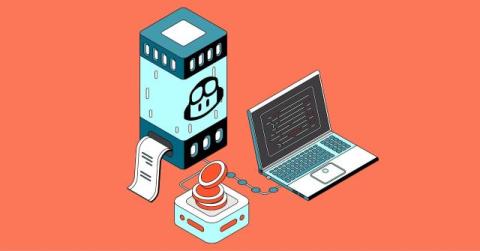
Building AI SRE Agents, Part 1: Start Local, Break Things, Learn Fast

The first stage of AI SRE maturity is a laptop, a throwaway cluster, and zero production access. Here’s how to set it up, and what to watch for. AI SRE (Site Reliability Engineering) agents are AI-powered systems that automate the most time-consuming parts of incident response: triaging alerts, correlating logs and metrics, generating root-cause hypotheses, and proposing remediation steps.

Boost Is Now In Public Preview

Today, we’re excited to announce that Boost is moving out of beta and into public preview. After months of building, breaking, and rebuilding inside JFrog’s own R&D organization, Boost is ready for the world. If you are currently running into token limits, unpredictable costs, or runaway usage from AI agents, Boost was built for you. It has already helped our teams reduce token spend while maintaining performance.

Why cloud repatriation is happening now

Cloud first was gospel for a decade. But the calculus has changed, and organisations are asking harder questions about where their workloads actually belong. In this clip, Civo Product Director Russ Smith breaks down the four forces that have converged to shift the default: spiralling bills that are no longer defensible at scale, the Broadcom acquisition that detonated VMware pricing overnight, sovereignty becoming a boardroom procurement requirement, and AI making new hardware brutally expensive.