Operations | Monitoring | ITSM | DevOps | Cloud

The latest News and Information on DevOps, CI/CD, Automation and related technologies.

Kubernetes: Weighing Advantages and Disadvantages

Kubernetes is one of the current leading technologies. Its adoption has seen tremendous growth in the past few years. The concept of containers is a paradigm that appears to be the predominant medium of software development and deployment in the coming future. Containers help maintain consistency across various platforms, as they pack an application with its dependencies to help move it from one platform to another.

Announcing Ribbon Voice Sync for Regional and Rural Service Providers

Regional and rural providers are challenged every day to keep their network together. Time, obsolescence, razor-thin margins, and changing customer expectations are conspiring to pull it apart. Watch on-demand to learn how Ribbon is synchronizing multiple elements of our portfolio into a new and better solution for regional and rural providers.

Failover Conf follow-up: Your team and culture questions answered!

Thank you all for joining us last week for Failover Conf 2! We had a great turnout this year, with over 1,800 participants, 20 sponsors, and 9 amazing sessions. After more than a year of virtual events and video calls, we know that Zoom fatigue is real. We tried to make this event different by finding new ways to bring the community together and thinking of fun new ways to shake up the conference formula.

Out with GraphQL, in with gRPC

At Speedscale, we’re always trying to find ways to iterate faster and reduce developer toil. In line with that mission, we slant our engineering decisions towards using cutting edge tech because we usually move faster and it also allows us to help our customers later on when they upgrade their own tech stack. Recently, we had the opportunity to upgrade the communication channel between our api-gateway and react front end. This journey provided some unexpected benefits.

Managing Users and Groups with SCIM in the JFrog Platform

When your organization becomes bigger, managing the users and groups lifecycle becomes a significant challenge. Your company grows rapidly, hiring new employees, and giving them access to more and more applications that your organization uses. This means that there are many employee-related actions that need to be taken when an employee changes their team, role, leaves temporarily or permanently (otherwise you may end up with operational, security or compliance issues).

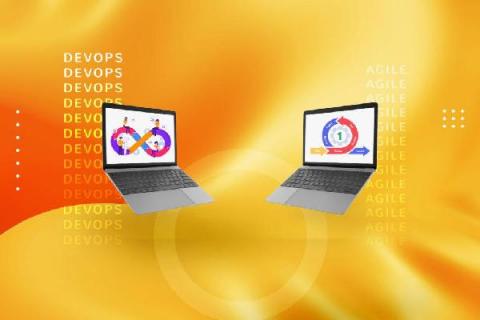
DevOps vs. Agile

DevOps is a term for, “a cross-disciplinary practice dedicated to the study of building, evolving and operating, rapidly-changing resilient systems at scale.” (Jez Humble) There is no wall between development and operations so they work simultaneously and without silos. The system focuses on uniting the developmental and operations teams in a continuous process. Agile is a software development strategy that focuses on responding to change with cross-functional team communication.

What is Enterprise Architecture & How to Develop .Net Based Enterprise Architecture?

Developing a holistic enterprise architecture is the first step to acquiring a wholesome grip over the evolution and management of an organization. Enterprise architecture enhances Business Process Improvement and significantly optimizes costs by standardizing technology – two of the most crucial factors that influence the ROI of an organization. The enormous efficiency and cost-savings, that enterprise architecture brings about, have strengthened the belief in enterprise architecture today.

Model-driven audit trail infrasructure

Graylog is one of the most popular tools for opensource monitoring and log management in telco environments. We will show how Charmed OSM with the help of juju eases its deployment and integration with MongoDB, elastic search, and other charmed telco network function elements. The same goes for a basic LMA stack with Prometheus and Grafana.

CostOps: The Overlooked Developer Responsibility

Developers are the kingmakers. Millions of decisions made by tens of thousands of developers are ultimately responsible for the triumph or tragedy of IT. Developers for commercial vendors, open-source projects, cloud and software as a service (SaaS) solutions, managed service providers (MSPs), and internal teams make most technology decisions far upstream from IT pros. This essentially defines ops’ role as the crew who finds a way to make washing machines fly in formation.

How to Connect the Dots: Creating Complex CI/CD with JFrog Pipelines

As software gets more complex, so do software builds. With applications being composed of multiple services — often developed by separate teams — it can be challenging to automate a unified continuous integration process. JFrog Pipelines is unique among DevOps CI/CD solutions in empowering developers to create highly complex DevOps Pipeline workflows. Pipelines can be defined with multiple paths, trigger points and trigger types.