The latest News and Information on DevOps, CI/CD, Automation and related technologies.
Let's all face it, on call work isn't fun. But it can be better. Even if you have to work on call, it would be nice to have at least some of the work done for you, before you drag yourself out of bed at 3am to respond to an incident.
When we launched Qovery in January 2020, our product was still a prototype, and we onboarded 53 developers to help them deploy their apps in the cloud. At the time, we were only 2 on the team, and our first employee (Patryk Jeziorowski) decided to join us after being one of our first users. 18 months later, 3004 developers from more than 110 countries use Qovery to deploy their apps on their AWS and Digital Ocean account.
Testing in production simply means testing new code changes in production, with live traffic, in order to test the system’s reliability, resiliency, and stability. It helps teams solve bugs and other issues faster, as well as effectively analyze the performance of newly released changes. Its overall purpose is to expose problems that can’t be identified in non-production environments for reasons that may include not being able to mimic the concurrency, load, or user behavior.
In case you missed it, this webinar includes code walkthroughs that help you to add observability to your pipelines (using a free Honeycomb account!) so that you and your team can speed up your deployments to prod. This is also a risk-free way to get started with observability if your team isn’t quite yet ready to change your production apps.
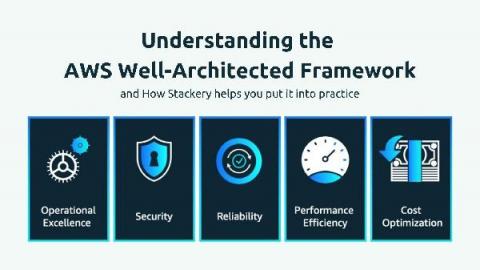
Designing and running workloads in the cloud is complex. Many services need to fit together in just the right way for optimal performance. The opportunity for error lurks around every corner. This is a high-stakes game with a huge premium on getting things right from the beginning. Even small mistakes can snowball. To help, AWS studied the architectures of thousands of its customers and supplemented that learning with insights from experts.
In order to avoid the repetitive tasks performed over the desktop, Microsoft has developed an extended service, the Power Automate Desktop. It has been recently announced by Microsoft, which has been made available to Windows 10 users. It is a new low-code Robotic process automation that enables business empowerment to automate those tasks that are repetitive and other manual tasks to focus better on higher-value work and to establish more in their corresponding areas of work.
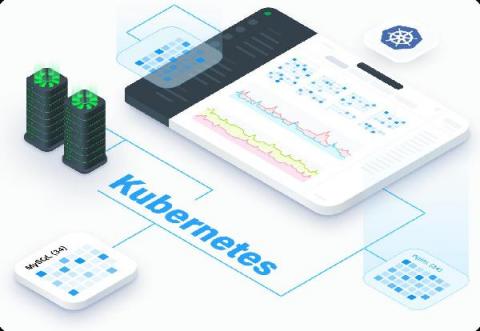
Kubernetes enables teams to deploy and manage their own services, but this can lead to gaps in visibility as different teams create systems with varying configurations and resources. Without an established method for provisioning infrastructure, keeping track of these services becomes more challenging. Implementing infrastructure as code solves this problem by optimizing the process for provisioning and updating production-ready resources.
Infrastructure monitoring was difficult enough when entire businesses ran off a few bare metal servers in a dusty, forgotten closet. Other IT infrastructure monitoring tools fell short, unable to provide complete and granular-enough metrics in real time, even when we were only dealing with a handful of systems responsible for running every part of the application stack.