The latest News and Information on DevOps, CI/CD, Automation and related technologies.
Canonical’s UA and Pro customers can now fully benefit from their subscriptions directly in containerised environments and pipelines. The new UA client release (27.7+) makes it easier to enable FIPS mode in Ubuntu containers. It also automatically signs up CI/CD builds for 10-year security updates to never worry about production container images getting timely patches for high and critical CVEs.
At a going away party from a job I was leaving a few years back, my VP of engineering told a story I didn’t even remember but that I know subconsciously shaped how I viewed my role on that team: Toward the end of my very first day at the company, there was some internal system issue, and with pretty much zero context, I pulled out my laptop, figured out what was going on, and helped fix the issue.
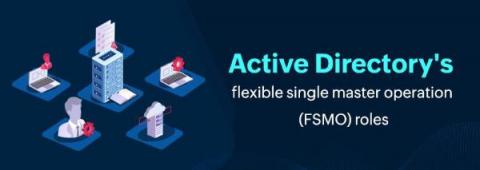
Do new users created on one domain controller (DC) of an Active Directory (AD) environment, ever get erroneously deleted only after a few minutes by DCs of other sites within an AD forest? Do changes made in a particular AD site ever get rewritten by DCs in other sites? Can AD objects be erroneously identified? Can more than one AD user account, for example, with all its associated attributes, be a replica of another user account?
In this article, you will learn about some of the tools to test microservices running in a Kubernetes cluster. In particular, we will compare the Speedscale CLI tool with other tools and the main benefits of using Speedscale CLI. In the last few years, software companies have been shifting from building monolith applications to utilizing smaller microservices. In a microservices architecture, you operate with decentralized applications. This means that there's a separation in which each service is responsible for a specific component of your application.