Operations | Monitoring | ITSM | DevOps | Cloud

The latest News and Information on DevOps, CI/CD, Automation and related technologies.

What is Continuous Integration and Continuous Delivery?

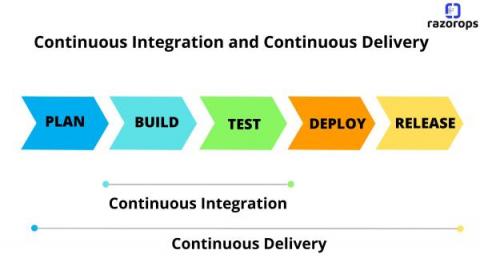
Continuous integration is a DevOps practice, where developers continuously integrate the code changes into a central repository. It most often refers to the build or the integration stage of the software release process. A continuous integration service helps to automatically build and run unit tests on the new code changes to find any errors instantly.
What is Continuous Integration (CI) - Best Practices, Benefits of CI, Tools

Continuous integration (CI) is a development practice where development teams can make small, frequent changes to code. With an automated build which verified the code each time developers verify their changes into the version control repository. Which helps the development teams to detect any defect in an early stage. Continuous integration is the first part of CI/CD, which enables the development team to release the code changes gradually to production quickly and regularly.

Secure Multi-Tenancy for Charmed Kubernetes with Clastix' new Charmed Operator

The new Charmed Operator covering the Capsule Kubernetes extension allows users of Canonical’s Charmed Kubernetes distribution to automatically install and integrate Clastix Capsule Multi-Tenancy as part of the Kubernetes cluster deployment process.

Digitalization Is Key To Competing In This New Era Of Customer Experience

Customer experience (CX) is becoming an increasingly strategic part of any company’s brand as businesses become more customer-centric. And thanks to technologies that give customers more options than ever, right at their fingertips, consumers expect a flawless CX, anytime and anywhere, regardless of medium. In other words, customer retention and satisfaction is intertwined with CX.

Continuous Performance Testing in CI Pipelines: CircleCI

With over 50,000 active organizations and 250 million workflows, CircleCI is one of the most popular networked CI platforms. When getting started with CI pipelines, teams typically want to ensure that code will compile, pass unit tests, and build a container image. After catching these low hanging fruit of syntax errors, engineering teams need to dig much further to find business logic and scalability errors.

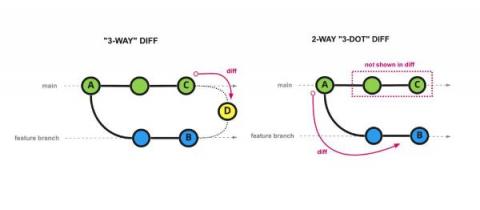
Improving performance on complex diffs

Bitbucket Cloud is making changes to pull request diff functionality that will improve diff performance, particularly on complex diffs. We are changing our diff algorithm from what we call a '3-way' diff to a 2-way 'three-dot' diff, which will show the difference between the tip of a source branch and the commit from which it branched off the destination, as shown below. This new diff will be implemented on the Pull request page and Branch page in the coming weeks.