Operations | Monitoring | ITSM | DevOps | Cloud

The latest News and Information on DevOps, CI/CD, Automation and related technologies.

A Kubernetes Observability Tool to Support SRE Best Practices

Kubernetes can be tough to troubleshoot and remediate fast, especially when you have many interdependent services. This blog, part 3 of 3 in the “8 SRE Best Practices to Help Developers Troubleshoot Kubernetes” series, describes the Kubernetes observability foundation StackState has built to support SRE best practices and enable rapid remediation of issues.


Identify the root causes of issues and bottlenecks in your build pipelines with TeamCity and Datadog

TeamCity is a CI/CD server that provides out-of-the-box support for unit testing, code quality tracking, and build automation. Additionally, TeamCity integrates with your other tools—such as version control, issue tracking, package repositories, and more—to simplify and expedite your CI/CD workflows.

Automating deployment to an EKS cluster using CircleCI and Helm Charts

Kubernetes is a container orchestration system for automating deployment and managing containerized applications. Helm is a Kubernetes package manager that helps you define, install, and upgrade Kubernetes applications. It lets you define reusable templates for Kubernetes components (deployment, service, hpa, service account, etc.) that can be published and shared across applications. In this tutorial, you will learn how to build and install Helm charts for your application to an AWS EKS cluster.

Sponsored Post

The Risks and Pitfalls of Too Many Monitoring Tools

If you are like most organizations, your technology environment is a complex mixture of tools needed to run your business. In this environment, monitoring and observability are critical to making sure everything is running smoothly. You use monitoring tools to measure server resources, log-parsing tools for troubleshooting, application tools to observe application performance, and audit-request tools to comply with regulations. While these are all valid observability needs, there are risks to overdoing it by introducing too many tools. Here are some ways to avoid monitoring proliferation when developing your observability strategy.

What is Azure Blob Hot Tier Storage?

Microsoft Azure Blob Storage is a scalable, cost-effective, and high-performance cloud storage solution that enables businesses to store massive amounts of unstructured data. With Azure Blob Storage, users can access and manipulate data from anywhere in the world through the Azure Storage REST API or the Storage Client Library. One of the key considerations when using Azure Blob Storage is the choice of storage tier, as it significantly affects cost and performance.

Canonical joins the confidential computing consortium

Canonical is committed to enabling Ubuntu users to leverage the strong run-time confidentiality and integrity guarantees that confidential computing provides. That is why we are happy to announce we have joined the confidential computing consortium, a project community at the Linux Foundation that is focused on accelerating the adoption of confidential computing and driving cross-industry collaboration around relevant open source software, standards and tools.

Qovery and Doppler Join Forces to Empower Developers with Next-Level Cloud Deployment and Security

I am excited to announce the partnership between Qovery and Doppler. Qovery is an infrastructure automation platform that helps developers deploy their applications more easily, while Doppler is a fully managed SecretOps platform that enables engineering teams to better manage their environment variables and secrets.

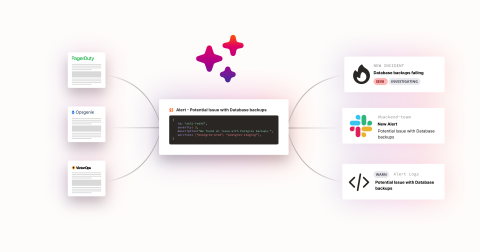
Automatically Create Incidents from Alerts with Alert Routing

Shouldn’t your alerts be doing more of the work for you? A noisy channel with every alert from hundreds of monitors and microservices is a chaotic place to actually find the incidents that are impacting your customers. And it still requires a heck of a lot of human intervention. We think it’s time for something better. Today we’re releasing Alert Routing: the next phase of worry-free automation from FireHydrant.

Practical tips for rightsizing your Kubernetes workloads

When containers and container orchestration were introduced, they opened the possibility of helping companies utilize physical resources like CPU and memory more efficiently. But as more companies and bigger enterprises have adopted Kubernetes, FinOps professionals may wonder why their cloud bills haven’t gone down—or worse, why they have increased.