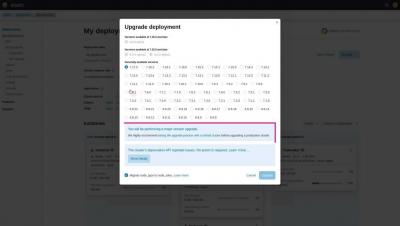
How to upgrade your Elastic Cloud deployment
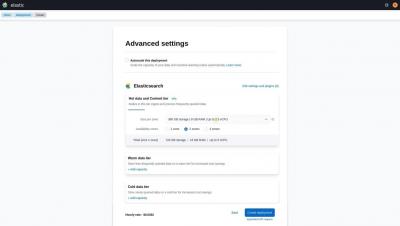
On Elastic Cloud, you can upgrade your Elastic Cloud deployment to a new version with a few clicks. This video walks you through the upgrade process on the Elastic Cloud console.


The latest News and Information on Cloud monitoring, security and related technologies.
We are excited to announce that Splunk Cloud Platform is moving to next generation AWS Graviton2 processor hardware to help enable enhanced performance for customers who choose AWS as a provider. This begins a phased transition of our Splunk Cloud Platform indexer tier in a move that will help Splunk operate more efficiently and provide customers with the cutting edge in processing technology.
DynamoDB, the primary NoSQL database service offered by AWS, is a versatile tool. It’s fast, scales without much effort, and best of all, it’s billed on-demand! These things make DynamoDB the first choice when a datastore is needed for a new project. But as with all technology, it’s not all roses. You can feel a little lost if you’re coming from years of working with relational databases. You’re SQL and normalization know-how doesn’t bring you much gain.
For security teams, properly managing which users can access resources and governing the level of access those users have is about as basic as locking the door at night. Understandably then, there are thousands of options available to fine-tune or revoke access, and it’s likely that issues come up daily for most companies—if not hourly.
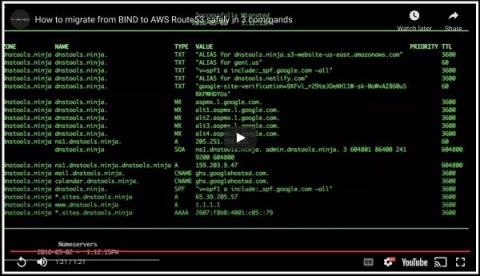
Migrating your DNS to a cloud provider like Amazon’s Route53 service can be a daunting task. Thankfully, with dns-tools you can test your DNS records before and after the migration to ensure that everything made it across in one-piece. This is the three steps we follow when migrating to Route 53: Follow along below and in just 10 minutes you’ll know if everything will migrate smoothly for you.