Operations | Monitoring | ITSM | DevOps | Cloud

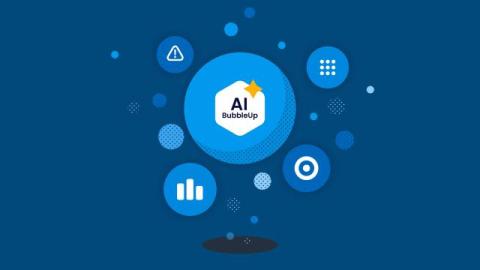
Introducing AI BubbleUp

BubbleUp has always been the fastest way to figure out what a group of outliers have in common. Draw a box around a band of slow traces, a cluster of errors, or any set of events you're interested in, and BubbleUp compares that selection to the baseline across every dimension you've sent us. It's how Honeycomb users find the "unknown unknowns" that dashboards can’t show you.

The Hidden Risk of Scaling AI Without a Single Source of Truth

AI doesn’t fail because it’s not smart enough—it fails because it can’t see the full picture. In this video, Sterling Parker, Ivanti’s SVP of Technical Solutions and Services, explains why fragmented and "dirty" data is the biggest obstacle holding AI back for organizations today. When AI pulls from disconnected systems, it’s forced to fill in the gaps with its own intelligence, leading to hallucinations and outcomes that are hard to trust. Sterling breaks down how these "cracks in the foundation" can actually create new security vulnerabilities when scaled too quickly.

How Insight Is Transforming Managed Services in the AI Era

How will AI reshape managed services? The next chapter of managed services won't be measured by how fast teams react to alerts, but by how well they anticipate and prevent them. ScienceLogic CEO Dave Link and Paul Neiswinger, VP of Global Managed Services at Insight, a leading Solutions Integrator that helps clients solve technology challenges by combining the right hardware, software, and services, discuss the shift from reactive operations to proactive, outcome-driven service, and what it takes for leaders to get there.

DCIM in the AI Era: The Now, the New, and the Next of Data Center Infrastructure Management

Data Center Infrastructure Management (DCIM) software is evolving in three overlapping stages: Now (a unified ingestion and observation layer across power, cooling, and IT systems), New (expanded control functions, including bandwidth management), and Next (generative and agentic AI built on top of that monitoring foundation). Understanding which stage a platform actually operates in is the single most useful filter for evaluating DCIM vendors in 2026 and beyond.

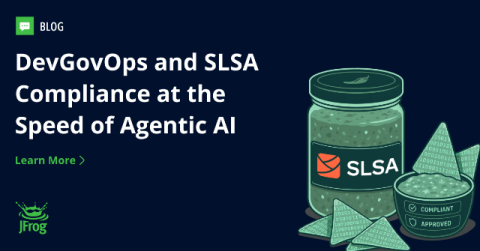
The Secret Sauce of SLSA: DevGovOps at the Speed of Agentic AI

Software supply chain engineering has reached a critical inflection point. As autonomous AI coding agents transition from generating autocomplete suggestions to planning, writing, reviewing, and deploying entire software pipelines without humans in the loop, the connection between human intent and production binaries is fracturing.

From Claude Code to Production: A Monitoring Checklist for Python Developers

Python is the native language of AI-assisted development. Models are really good at writing it, and a lot of people are now shipping it without ever having written much Python themselves. The whole thing is really simple. You prompt an app, Claude Code or Cursor produces a working Flask or FastAPI backend, and you’re live in a few hours. However, there’s still a big difference between “it works on my machine” and “it works in production”.

How the UK Conveyancing Process Can Be Automated and Streamlined Using Digital Tools

Buying or selling a home has historically been a waiting game filled with massive paper trails, slow posts, and constant phone chasing. Fortunately, the UK property market is undergoing a significant shift as innovative digital tools replace archaic workflows.

Enterprise AI isn't broken; your data is broken

A friend who runs data engineering at a mid-sized logistics company once showed me something that made me laugh, and then made me a little sad. Her team spent four months building a chatbot that was supposed to answer simple questions like "how many shipments are delayed in the Chennai warehouse right now." The bot worked beautifully in the demo. Then someone asked it a real question, and it confidently returned a number that was off by almost a factor of ten. Not because the model was dumb.

Where Historians Fall Short for Physical AI

Summary Physical AI—machines and industrial systems that sense conditions, reason, and act in the real world—needs two things from operational data: detailed history for training, and real-time telemetry for inference. Traditional data historians weren’t built for either at the speed Physical AI requires. Four gaps result: limited real-time access, compression that strips model-relevant signal, IT/OT fragmentation, and site-by-site architectures.