Operations | Monitoring | ITSM | DevOps | Cloud

Building AI SRE Agents, Part 3: Autonomous in the Cloud

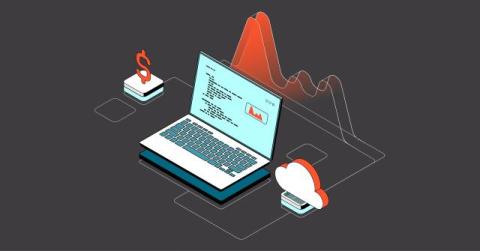
Your agent has earned trust in shadow mode. Now it runs on its own: an alert fires, the agent starts, investigates and proposes a fix before anyone opens a laptop. Here is what it takes to make that safe, scalable and better every week. This is the third article in a series on taking an AI SRE agent from a weekend experiment to production. Part 1 built a local, read-only agent on a throwaway cluster and refined it against a synthetic eval set.

Where Jev fits in ops

If you're using agents and MCPs to get a better understanding of your environment or work through an investigation, you can get a lot of useful information back. You can pull logs, look at recent changes, and check how services are configured, but you're still the one deciding what to do with all of it. That part of the process still lives in your head. To see where Jev might fit, look at decisions your team already makes and work backwards from them.

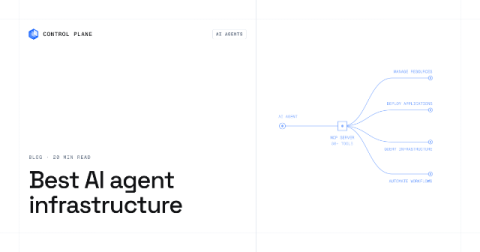
10 Best AI Agent Infrastructure Platforms in 2026

AI agent infrastructure is the set of platforms that run agents and the code they write. It has three layers: sandboxes that isolate untrusted, model-generated code, runtimes that run the agent and its services in production, and orchestration layers that save an agent’s progress so a long run can resume after a failure. Most production agents need more than one layer. This guide compares 10 platforms across all three, with isolation, state, deployment, and compliance for each.

When AI agents ignore the code freeze: governance that holds | EVOLVE 2026

AI can write 1,100 lines of code for a loading spinner in five minutes. Your change board still meets once a week. Karthik Jayaraman, VP of Information Technology at Fiserv, explains what happens when code generation speeds up and everything downstream stays the same. He covers why "human in the loop" doesn't scale, why handing all review to AI backfires, and why an agent told not to touch production needs a boundary it can't cross, not just an instruction.

AI is making software delivery less stable. DORA's Nathen Harvey on the fix | EVOLVE 2026

DORA's data shows that as AI adoption goes up, individual effectiveness rises, and so does software delivery instability: more rollbacks and more unplanned rework. Nathen Harvey of Google's DORA team explains why AI acts as an amplifier of whatever system you already have. He walks through the seven capabilities that separate teams getting real gains from teams drowning in downstream chaos. He also argues that the risks stopping you from shipping AI-built work should become your platform roadmap.

Shipped: Project this month's AI cost before the invoice closes

The question comes up on the 10th, the 15th, and again on the 25th. Where is AI spend going to end up this month? The invoice won’t tell you until it’s closes, and by then there’s nothing left to forecast. “If I’m looking at this on the 15th, I want to know where we’re going to land.” That’s how a finance lead put it during a persona session in September, and it’sthe whole job. You have half a month of real usage behind you.

Claude Opus pricing in 2026: every model, every rate, and whether it's worth it

Claude Opus pricing is $4 per million input tokens and $20 per million output tokens on Claude Opus 5.5, the current model, with cache reads at $0.20 and batch jobs at $2/$10. Opus 5 and the legacy 4-series bill at $5/$25. The 1M context window carries no surcharge. Every Opus model Anthropic shipped in 2026 held the same line: $5 in, $25 out, per million tokens. Opus 4.6 in February, 4.7 in April, 4.8 in May, Opus 5 in July. Four releases, one price. On September 22, 2026, the line broke.