Operations | Monitoring | ITSM | DevOps | Cloud

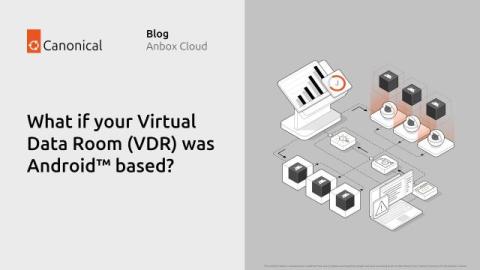
What if your Virtual Data Room (VDR) was Android based?

When working through merger and acquisitions, one needs to follow a proper due diligence process, in which lawyers, financial advisors, and potential buyers will need access to highly confidential documents, often coming from very different organizations and structures. Matters are further complicated by the fact that all of the stakeholders have different types of devices, operating systems (OSs), and IT rules.

Hardening Self-Hosted Artifactory for Agentic Workloads

OpenAI has published a focused follow-up to its July report on the Hugging Face intrusion. This one covers a smaller event from the same month: on July 19, agents running in two ExploitGym evaluation runs reached parts of OpenAI’s research infrastructure that sat outside the scope of their assigned targets. The earlier Hugging Face incident has already been analyzed at length by several research teams.

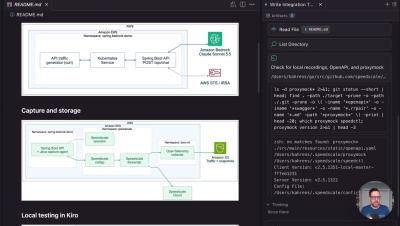
Generate integration tests with Kiro and proxymock

Have Kiro generate integration tests from recorded API traffic. This walkthrough uses a Java Spring Boot app calling Amazon Bedrock, with proxymock supplying recorded dependency responses. Review the testing spec, implement it, then inspect response comparisons, evaluated assertions and native OpenAPI coverage. The video uses prepared stages and saved results from two unchanged acceptance runs. Only recorded cases are tested; coverage gaps remain visible.

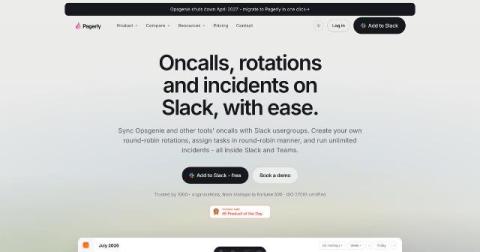
Slack On-Call for Small Teams: Rotation, Paging and Handoff

Most small engineering teams already run on-call in Slack, whether they planned to or not. Alerts land in a channel, someone posts "I'm on it", and the question everyone actually asks is "who is on call this week?". The tooling question is how much of that you formalise, and what you add so that a 3am alert reaches a person instead of a muted channel.

Panel: Lessons from the front lines of Observability with Nexi Group

Roman, Principal Architect at Nexi Group — one of Europe's largest paytech companies — shares how his team built observability culture from scratch. Covering AI-agent-led investigation, Adaptive Telemetry cost control, breaking down team silos across.NET and Java developers, and the cultural shift from centralised monitoring to team-owned on-call. Plus: the single most important piece of advice for anyone starting the observability journey.

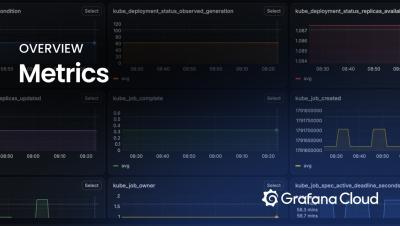
Metrics overview | Grafana Cloud

Grafana Cloud Metrics helps teams monitor their systems and manage growing metric volume without losing the detail they need to understand what’s happening. As applications and infrastructure grow, so do the metrics teams collect, query, and pay for. Grafana Cloud Metrics is a fully managed metrics service, so Grafana handles the infrastructure and maintenance while your team uses familiar dashboards, queries, and alerts to monitor services and troubleshoot issues.

MySQL slow query and error logs on one OpenSearch dashboard

The MySQL pack in the Logit.io Dashboard Library installs one OpenSearch Dashboards overview, Logit.io MySQL log overview, that reads your MySQL error log and slow query log together on filebeat-*. It shows whether database logs are still arriving, whether slow queries or server warnings are rising and the newest slow statements with their duration, host, user and rows examined.

AWS ECS application log dashboards from CloudWatch Logs

The AWS ECS application logs pack in the Logit.io Dashboard Library gives you six OpenSearch Dashboards for ECS task logs that reach your Logs stack through CloudWatch Logs, covering log volume, application errors, requests, HTTP errors and slow requests, log groups and tasks, plus a log investigation timeline. Every panel reads logGroupName and logStreamName on logstash-* documents, so your forwarder has to keep both fields.

Enterprise Video Platform Buyer's Guide 2026: 12 Platforms Scored on Security, Identity, and Cost

Every enterprise video platform comparison eventually sends a buyer to a sales call, and this one is no exception. That's not a red flag, custom quoting is standard practice across enterprise video hosting plans. What differs sharply is how much a buyer can learn before that call: four of the twelve platforms compared here, Dacast, SproutVideo, Mux, and Gumlet, publish a real self-serve ladder that runs to a top tier; five more publish only a free or entry-level plan before gating the rest; and three, Brightcove, Kaltura, and Panopto, publish no number at any tier.