Operations | Monitoring | ITSM | DevOps | Cloud

AI Writes Code But We Own the Consequences

Professional engineering now incorporates many of the practices we used to call vibe coding. As a lifelong engineering and product leader, I find this development mildly offensive. Progress continues regardless of my feelings. We take a working demo and call it progress. We are starting to treat a green unit test suite and a simple smoke test as software engineering. This is an embarrassing instinct for someone who knows production exists and that customers pay for our service.
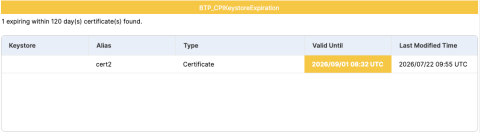
How do you monitor SAP Cloud Integration before iFlows fail?

SAP Cloud Integration monitoring works best when it looks beyond the failed message list. Confirm that every artifact is deployed and started, compare failures and processing times with each flow’s own history, and track the keyStore, JMS broker, data stores and variables. Those signals usually change well before an iFlow stops a business process.

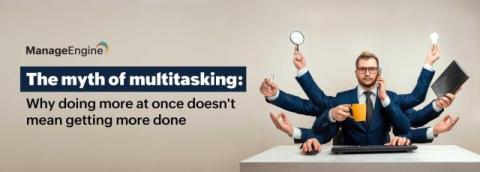
The myth of multitasking: Why doing more at once doesn't mean getting more done

We've all done it. Answering an email while attending a meeting, checking messages while preparing a presentation, or switching between multiple tasks in an attempt to get through the day's workload. Multitasking often feels like the most efficient way to work. After all, why finish one task when you could supposedly finish three? But there is a catch. What we perceive as multitasking is often our brain rapidly switching its attention between activities rather than performing them simultaneously.
Sponsored Post

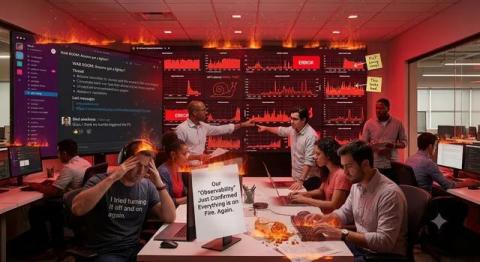
Your Observability Stack Found the Fire. Congratulations.

The dashboards are red, the alerts are firing, and Slack has officially become a war room. Someone has asked, "Anyone else seeing this?" and 14 people have immediately responded with screenshots. Welcome to another day in distributed systems. The recent GitHub outage is a great reminder of how complicated modern applications have become. Services talk to services, infrastructure scales up and down, retries multiply traffic, and dependencies behave in ways nobody expected. Thankfully, we have observability.

A Simple Software Factory with Kepler

I kept seeing people talking about “Software Factories” on social media, but I’ll admit that I had no idea what a software factory was. So, I put in some time to read up on it. Shockingly, I still see people saying it’s the same as a Ralph Loop, but I disagree. I’m still not an expert but I’ll do my best to explain them and how I think Kepler makes setting one up into an easy and approachable process.

6 Best Code Review Platforms for Hybrid Dev Teams (2026)

Your team splits repos across GitHub, GitLab, and Bitbucket. Pull requests pile up in different interfaces, reviewers lose context jumping between platforms, and code review turns into a coordination headache instead of a quality checkpoint. GitKraken gives hybrid teams a unified code review platform that connects pull request workflows across GitHub, GitLab, Bitbucket, and Azure DevOps in a single workspace.

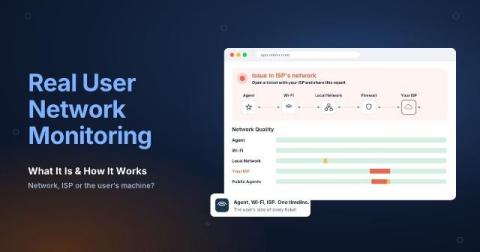
Real User Network Monitoring (RUM): What It Is and How It Works

So let’s say that a user opens a ticket: Teams keeps freezing, uploads crawl, "the Internet is slow." You check your network monitoring tool, but see that every test is green. The firewall looks fine, the ISP link is clean, the SaaS vendor reports no incident. The problem is still real. It's just happening where your tools can't see: on the user's laptop, on their Wi-Fi, or on the short stretch between their machine and the local gateway. Most network monitoring watches the infrastructure.

Explaining Atlassian AMP in Three Sentences

This AI Cast episode explains how Atlassian AMP, an agentic multiplayer protocol, should be described to customers. It compares human collaboration in shared Confluence Live pages with two AI agents that check Jira delivery dates or improve wording, while still tracking who did what, for whose behalf, and what they were asked to do. AMP is presented as a set of technologies and patterns that make agent identities, contributions, progress updates, context, permissions, and ways to guide or stop work clear and understandable.

AI agents belong on your Kubernetes platform

In Kubernetes, pods get a new IP every time they restart, so an IP can’t tell you which workload it is. Platform teams learned to identify workloads by labels and identity instead. AI agents are now teaching them a second lesson: an agent’s code can’t tell you what it will do. I believe AI agents belong on the Kubernetes platform. Not beside it, not around it, and not left to each team to secure alone. On it: identified, governed and contained like every other production workload.