Operations | Monitoring | ITSM | DevOps | Cloud

The latest News and Information on DevOps, CI/CD, Automation and related technologies.

15 Essential DevOps Apps for Microsoft Teams

DevOps engineers always need to check processes, increase work efficiency, and optimize operations. The main part of the work is to improve the quality of the product and set up smooth workflows. That’s why you need to control systems and react to downtime as quickly as possible. One of the best ways to do so is to get timely notifications is Teams DevOps Applications. MS Teams is widely used in many companies, so you probably already have it.

Automating Sentry Releases with our Netlify Build Plugin

Netlify allows developers and businesses to publish modern web projects right from your git repos. There’s nothing to set up & no servers to maintain. This past month, Netlify launched Build Plugins, which allows Netlify users to automate and customize their build processes. We loved what the Netlify team was building and how they were automating tedious tasks for developers. So we built the Sentry Netlify Build Plugin!

Bringing Cloud Load Balancer On-Prem with Rancher

The public cloud offers great scalability and flexibility for customers and is a model where service providers make many decisions on their behalf. For example, in cloud service providers like Google Cloud Platform (GCP), Amazon Web Service (AWS) or Microsoft Azure, a cloud load balancer is spun up on demand. The load balancer gets an IP address automatically and your application is ready to be served.

LogicTalks - How Aurora Innovates and Automates with Cloud Monitoring

In this episode of LogicTalks, Mark Banfield, Chief Revenue Officer at LogicMonitor, sits down with the CEO of Aurora, Ant Molloy. Aurora.io is a software and services organization who serves a wide variety of MSPs, telco resellers and IT resellers. Listen in as Mark and Ant discuss the innovative ways Aurora is able to quickly deploy and integrate devices in the cloud and on-premises to deliver ROI to its customers.

Announcing record of remediation & audit logs in Puppet Remediate 1.3

Today we are pleased to announce the release of Puppet Remediate 1.3.0. This release includes new features requested by our customers, including even more capabilities to help you track and trace network activity, and give you more control of the data in your dashboard. Read on for background and a look at the new capabilities.

Optimize Ghost Blog Performance Including Rewriting Image Domains to a CDN

The Ghost blogging platform offers a lean and minimalist experience. And that's why we love it. But unfortunately sometimes, it can be too lean for our requirements. Web performance has become more important and relevant than ever, especially since Google started including it as a parameter in its SEO rankings. We make sure to optimize our websites as much as possible, offering the best possible user experience.

Continuous Integration & Delivery @ Moogsoft: GitLab and Jenkins Integration

Introduction One of the SRE team’s goals at Moogsoft is to make sure our feature teams have an easy path from local code changes to production. Changes rolling out to production mean new features, bug fixes, optimizations, and more, which translates into value added for our customers. In short, at Moogsoft we are all about making sure our product is continually evolving, and one way the SRE group helps is by building shared Jenkins functionality our engineers understand and can use quickly.

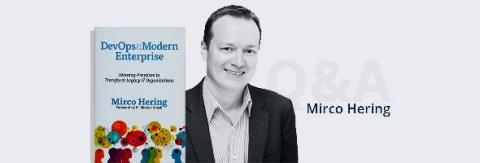
Mirco Hering on Getting Past DevOps Inertia

Mirco Hering is principal director of APAC DevOps and Agile with Accenture. He supports major public and private sector companies in Australia and overseas in their search for efficient IT delivery. Mirco blogs about IT delivery at NotAFactoryAnymore.com and is author of “DevOps For The Modern Enterprise: Winning Practices to Transform Legacy IT Organizations.”

Capturing and Containing Hidden Cloud Costs-How Overprovisioning Can Hurt Your Budget

The traditional method of planning server, network, and storage capacity is to look at the usage peaks and then add a safety margin. Most cloud hosting is planned this way. The idea that you only pay for what you use is not based on actual usage, rather on the capacities you initially specify. Most cloud migrations involve a ‘lift and shift’ approach of moving an application to a different host with minimal maintenance.