The latest News and Information on Digital Experience Monitoring for End Users, Employees and Remote Working.
DevOps is a common name in the technology household. Teams, small or big, are embracing this concept to deliver applications faster, improve software quality, and add efficiency in the development process from the very beginning. Shortening the feedback loop leads to a cost-effective way for businesses to find and fix defects earlier in the cycle process. Plus, it lowers the software failure rate in production and minimizes time wastage for the development team.
User experience is subjective. For example, asking tourists visiting New York City about their experiences gives different answers. Likewise, end-users who work remotely with different resources and disparate assets can have varied experiences with their business applications. How can IT teams gather this experience data and react faster to improve experience? The answer is Digital Experience Scores.
As a Nexthink V6 Customer, you’re already realizing the power and value of a proactive, Digital Employee Experience (DEX) management solution: more productive employees, reduction in employee issues, and a smoother, more accelerated time-to-resolution for employee-reported IT issues.
This article originally appeared in VentureBeat. “I feel like my job performance is based on a rigged lottery.” That’s what the Director of End User Computing at a large European bank told me two weeks ago. Every quarter, her company runs an NPS-style survey asking employees about their IT Experience. If you work in a corporate setting, you’ve probably seen these questionnaires before.
Here’s a direct quote from an IT Manager I spoke with recently: “We’ve been using virtual desktop infrastructure (VDI) for a large percentage of employees for a few years now, but between you and me, it’s been a mess.
Leading an IT team often involves a careful balancing act between two priorities. On one hand, IT leaders must have an eye for innovation in order to keep up with rapidly changing environments. Meanwhile, there’s the constant pressure to reduce technological costs and ensure that IT is driving real value for the business. Within a nonprofit organization, managing these two priorities becomes an even more delicate process.
If you’ve been following recent tech news, you’ll know that Windows 11 is one of the hottest topics right now. Most of the conversation has been focused on users of the Home version, as Microsoft tries to get the average consumer excited with hot new features and a fresh look. But what about enterprise users who won’t have a choice in whether they upgrade or not? How are they going to feel about Windows 11?
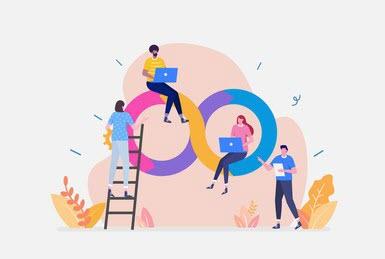
The pandemic has made clear that businesses can’t work in silos anymore. That reality extends to customer experience (CX) and employee experience (EX). The path to success is integration between the two to create a total digital experience, because happy employees produce happy customers. “The employee and customer experience are like a mobius strip or infinite loop.