The latest News and Information on DevOps, CI/CD, Automation and related technologies.
Worldwide end-user spending on public cloud services is forecast to grow 18.4% in 2021, with the cloud projected to make up 14.2% of the total global enterprise IT spending market in 2024, up from 9.1% in 2020, according to Gartner. Enterprises are, therefore, rightly concerned about controlling their public cloud costs—to ensure they’re getting all the value they’re paying for.
MEC, as ETSI defines it, stands for Multi-access Edge Computing and is sometimes referred to as Mobile edge computing. MEC is a solution that gives content providers and software developers cloud-computing capabilities which are close to the end users. This micro cloud deployed in the edge of mobile operators’ networks has ultra low latency and high bandwidth which enables new types of applications and business use cases.
Feb. 25, 2021 – DFI and Canonical signed the Ubuntu IoT Hardware Certification Partner Program. DFI is the world’s first industrial computer manufacturer to join the program aimed at offering Ubuntu-certified IoT hardware ready for the over-the-air software update. The online update mechanism of and the authorized DFI online application store combines with DFI’s products’ application flexibility, to reduce software and hardware development time to deploy new services.
Legacy monitoring tools weren’t built for visibility into the cloud and can obstruct your ability to compete and grow your business. Interlink Software works with MSPs to define, monetize and deliver AIOps monitoring solutions that meet the requirement for high-performing business services and hybrid cloud infrastructures that digital enterprises rely on.
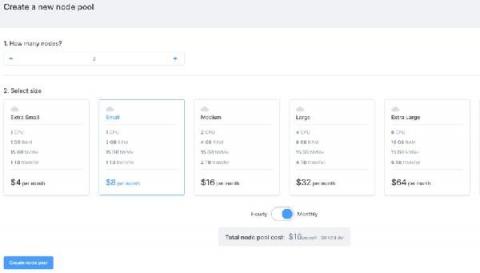
Google Kubernetes Engine (GKE) is the preferred way to run Kubernetes on Google Cloud as it removes the operational overhead of managing the control plane. Earlier today, Google Cloud announced the general availability of GKE Autopilot, which manages your cluster’s entire infrastructure—both the control plane and worker nodes—so that you can spend more time building your applications.
Bringing a new tool into an organization is no small task. Adopting a CI/CD tool, or any other tool should follow a period of research, analysis and alignment within your organization. In my last post, I explained how the precursor to any successful tool adoption is about people: alignment on purpose, getting some “before” metrics to support your assessment, and setting expectations appropriately.
The CircleCI API provides a gateway for developers to retrieve detailed information about their pipelines, projects, and workflows, including which users are triggering the pipelines. This gives developers great control over their CI/CD process by supplying endpoints that can be called to fetch information and trigger processes remotely from the user’s applications or automation systems.
DevOps came about as a result of ever-growing lags between development and operation. It’s a framework that deals with communication bottlenecks, allowing for smooth change management. DevOps monitoring is a crucial element and a necessity for this framework to succeed. Monitoring plays a vital role in realizing the underlying goals of DevOps. DevOps is all about eliminating technical inefficiencies and improving the speed of the whole cycle from development to deployment.
Security is paramount in today's digital world. Bad actors can use sensitive data to wreak havoc across thousands of machines in minutes if organizations do not have a solid cybersecurity strategy. Compliance requirements and regulations are increasingly calling for key management and strong encryption as part of a business's cybersecurity strategy. These are no longer optional but mandatory security requirements as DevOps also gains in popularity for agile development and application deployment.