Operations | Monitoring | ITSM | DevOps | Cloud

The latest News and Information on DevOps, CI/CD, Automation and related technologies.

Automate and scale your CI/CD with CircleCI orbs

For the past two and a half years as a Solutions Engineer at CircleCI, I’ve had the distinct pleasure of working with some of CircleCI’s largest customers to help them instill healthy CI/CD practices into their development processes. Leading-edge organizations are trying to make sure that their applications are scalable, reliable, and secure. Shipping products to users quickly and reliably is imperative to gaining a competitive edge.

Faster Incident Resolution with Context Rich Alerts

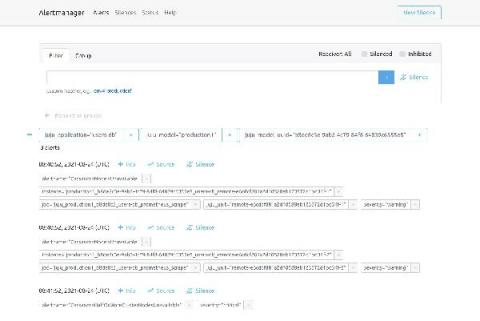
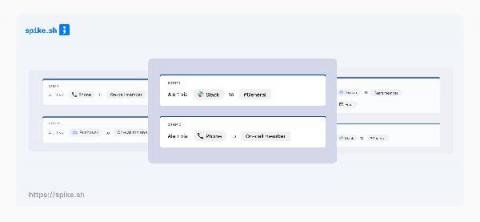
Labelling your alert payloads although simple can significantly improve the time it takes for your team to respond to incidents. In this blog learn how Squadcast's auto-tagging feature can be a game changer by enabling intelligent labelling & routing of alerts to ultimately reduce your MTTR. A frequent problem faced by on-call engineers when critical outages occur is pinpointing the exact point of failure.

Gremlin ALFI Demo - AWS RDS Unavailable - Chaos Engineering

In this demo, we'll share how you can use ALFI (Application Level Failure Injection) to make AWS RDS unavailable. This enables you to learn how your application handles different failure modes. We'll be using the ALFI Latency attack to perform this Chaos Engineering experiment.

Announcing the Gremlin Chaos Engineering Practitioner Certificate Program

Get started with Gremlin's Chaos Engineering tools to safely, securely, and simply inject failure into your systems to find weaknesses before they cause customer-facing issues. Chaos Engineering continues to grow in popularity and is rapidly becoming a job requirement. To help Engineering and Testing teams meet the need, we’re launching our first ever Gremlin Chaos Engineering Practitioner Certificate Program!

Why DevOps isn't a level playing field for financial services and insurance

Redgate recently published the 2021 State of Database DevOps report which, for the last five years, has followed the rise in DevOps and the challenges organizations face when adopting it for both application and database development. Based on a survey of thousands of IT professionals from around the world, it also provides the opportunity to dive a little deeper into how those challenges vary sector by sector.

What is MicroStack?

MicroStack provides a single or multi-node OpenStack deployment which can run directly on your workstation. Although made for developers to prototype and test, it is also suitable for edge, IoT, and appliances. MicroStack is an OpenStack in a snap which means that all OpenStack services and supporting libraries are packaged together in a single package which can be easily installed, upgraded or removed. MicroStack includes all key OpenStack components: Keystone, Nova, Neutron, Glance, and Cinder.

MicroStack: The most straightforward OpenStack ever

MicroStack provides a single or multi-node OpenStack deployment which can run directly on your workstation. Although made for developers to prototype and test, it is also suitable for edge, IoT, and appliances. MicroStack is an OpenStack in a snap which means that all OpenStack services and supporting libraries are packaged together in a single package which can be easily installed, upgraded or removed. MicroStack includes all key OpenStack components: Keystone, Nova, Neutron, Glance, and Cinder.

Use Microsoft Teams as Your Phone System: How to Get Started

Join Dr. E. Brent Kelly, Principal analyst at KelCor & Greg Zweig, Director of Solutions marketing for Ribbon as they discuss the critical thinking required to plan a successful transition to Teams Phone System. Brent regularly provides strategy and counsel to CIOs, CTOs, and technology buyers. More importantly, Dr. Kelly is not afraid to get his hands dirty, having deployed Teams Phone Systems himself; he’ll speak from firsthand experience!

10 Indispensable Software Deployment Tools

Software Deployment Tools (SDTs) help make software systems available to the target endpoints in a network from a central location. They include installation, distribution, configuration, upgrade, and management tools. All software applications need to be upgraded regularly, require new features from time to time, need security reinforcements against new and coming threats, require updates to remove bugs, and so on.