Operations | Monitoring | ITSM | DevOps | Cloud

The latest News and Information on DevOps, CI/CD, Automation and related technologies.

Are your SLOs realistic? How to analyze your risks like an SRE

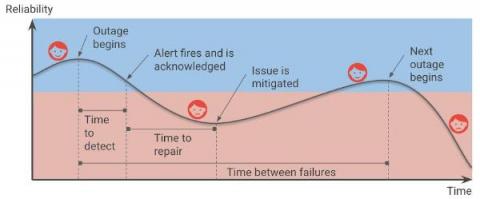
Setting up Service Level Objectives (SLOs) is one of the foundational tasks of Site Reliability Engineering (SRE) practices, giving the SRE team a target against which to evaluate whether or not a service is running reliably enough. The inverse of your SLO is your error budget — how much unreliability you are willing to tolerate.

Canonical Kubernetes 1.24 is now generally available

We consistently follow the upstream release cadence to provide our users and customers with the latest improvements and fixes, together with security maintenance and enterprise support for Kubernetes on Ubuntu. This blog is a quick overview of the latest development highlights that are made available in Canonical Kubernetes 1.24 as well as a look at our favourite upstream enhancements.

Cost optimised private cloud for financial services

Regulatory compliance and data privacy requirements require financial institutions (FIs) to consider carefully where their applications are running and where the customer data is stored. The data protection and data sovereignty laws in most countries require an enterprise to keep data in certain geographic locations. PCI Data Security Standard, for example, regulates the way the customer and financial transactions data is stored and transmitted.

31+ Best Software Development Tools (Organized By Category)

A software development life cycle (SDLC) is the sequence of steps a software project moves from conception to completion. The SDLC process specifies how to build, test, maintain, and improve specific software. Modern software development life cycles typically involve five to seven stages, depending on the model you use. Today, the SDLC comprises eight major models, from the traditional Waterfall approach to the ultra-modern Spiral Model.

Wind River Studio Enabling Hyundai Mobis and Hyundai AutoEver to Accelerate Development of Next-Gen Intelligent and Connected Vehicles

Wind River announces that Hyundai Mobis, one of the world's largest vehicle technology innovators and suppliers, and Hyundai AutoEver has signed an agreement to establish a strategic relationship that includes collaboration with Wind River Studio for the development of an automotive software framework and continuous test and test automation capabilities, as well as advanced software lifecycle management.

Using gRPC with Golang

In this tutorial, you will learn how to work with the gRPC Golang library for microservice communication by creating a simple note-taking application. APIs and service-to-service communication are what make modern microservice architecture possible. REST is generally the preferred implementation pattern, but if you only use REST, you could miss out on the significant performance gains that gRPC can offer. gRPC can provide better speed and efficiency than REST APIs.

Override default resource status: New feature in StackStorm 3.7.0

Coming up in StackStorm 3.7.0 is a new feature that allows administrators of a StackStorm installation to “override” the default resource status that was specified by the pack owners. One of the benefits of StackStorm is the large variety of packs available on the StackStorm Exchange. But sometimes, users may not want the default content status provided by the community packs. We’re introducing a new feature into StackStorm 3.7.0 to make this easier to manage.

Kubernetes Multi-Tenancy

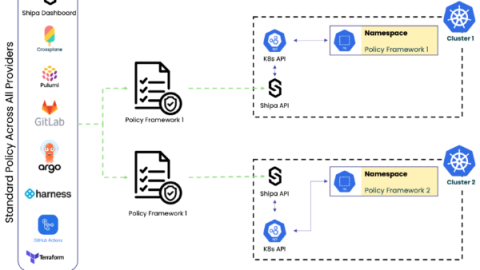
Things would be much simpler if we based all we built on Kubernetes on a single tenant type of architecture, meaning a single application running on the entire Kubernetes cluster with a single team who could access it. As teams scale Kubernetes adoption within their organizations, they see a different scenario instead, one with multi-tenant deployments performed by multiple teams and, most probably, across multiple clusters.

Using Rancher Desktop for Local Kubernetes Development

Rancher Desktop is an all-in-one solution for container management on your desktop workstation. It provides an easily maintained Kubernetes installation that runs on your local machine and streamlines setting up containerized workflows in development. Assembling a Kubernetes cluster from scratch can be daunting, because multiple components must work in unison. With Rancher Desktop, you get everything preconfigured with one software download.