Operations | Monitoring | ITSM | DevOps | Cloud

The latest News and Information on Cloud monitoring, security and related technologies.

Upgrading the Elastic Stack: Planning for success

"Upgrade" can be a four-letter word for admins, so at Elastic, we try to make the upgrade process as simple as possible. Why? Because we pack a ton of goodness into each release, but you can only take advantage of that goodness by being on the latest version of the Elastic Stack. This is also why we make the latest version available on Elastic Cloud the same day that we release.

InfluxDB Cloud extends to Microsoft Azure Cloud - now available on all major cloud platforms

SAN FRANCISCO — July 22, 2020 — InfluxData, creator of the time series database InfluxDB, today announced that InfluxDB Cloud is now available on Microsoft Azure, furthering the company’s commitment to increase accessibility to developers. With this announcement, InfluxDB Cloud is now live on all three major cloud platforms — Microsoft Azure, Google Cloud and Amazon Web Services.

Up and running with Calico Host Micro-segmentation on AWS

In this online training, we will explain how to install and configure Calico on AWS VMs to apply network policy to resources outside your K8s cluster. The talk will be primarily a walkthrough and demo and you will receive all manifests and instructions to do the demo on your own after the session.

Monitor Azure Functions With the Simplicity of AppOptics

Managing servers isn’t always the most effective way to run an application. With serverless computing, teams can deploy applications directly to managed hardware, scale them on demand, and avoid the overhead of provisioning and maintaining their own infrastructure. As many as 40% of companies surveyed by DevOps.com use serverless computing. And serverless platforms like Azure Functions make deploying serverless questions quick and easy.

What Is Serverless Architecture?

Serverless has been around for a minute now but it’s safe to say that it’s still in its infancy in 2020 and definitely has a long way to go. But serverless architecture is a major step away from to dependence on humans and towards reliance on machines. Are the machines already talking over? Not literally the “Terminator” movie scenario quite yet but is this the beginning of the end of an era in the world as we know it?

5 Scenarios That Demand Hybrid Cloud Deployment

The Cloud Is a No-Brainer… Most companies by now have a “to the cloud” initiative that’s at one stage or another of maturity. It’s a great way to make better use of all your resources—people, time, and money. And it gives you more flexibility. You don’t have to size your entire application architecture for important but short-lived peaks, such as Black Friday for retailers or year-end ERP closing for large manufacturers, to name just a couple examples.

Good Catch: Cloud Cost Monitoring

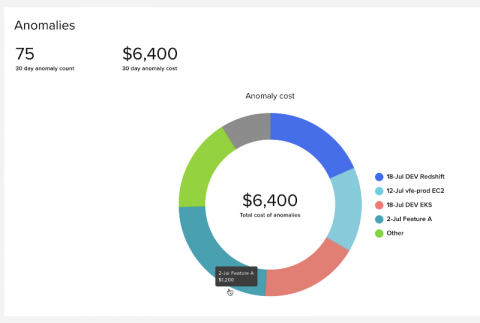
Aside from ensuring each service is working properly, one of the most challenging parts of managing a cloud-based infrastructure is cost monitoring. There are countless services to keep track of—including storage, databases, and computation—each with their own complex pricing structure. Monitoring cloud costs is quite different from other organizational costs in that it can be difficult to detect anomalies in real-time and accurately forecast monthly costs.

5 Popular Use Cases for Going Serverless

Since 2014 when AWS launched AWS Lambda and kickstarted the serverless movement, going serverless has grown exponentially for organizations of all sizes from one-man start-ups to huge listed global enterprises. While there are some challenges to this new architecture, the ways moving to serverless can transform a business often far outweigh these.