session start tool call tool call cost outcome AI coding agents have quietly become part of most engineering teams. They open files, run commands, call tools, and push changes, often for hours at a time. Yet when you want to know what an agent actually did, the answer usually lives in one developer’s terminal history, and it disappears when that session closes.
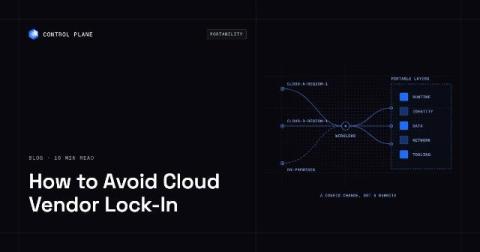
You avoid cloud vendor lock-in by keeping the parts that are expensive to move portable: the compute runtime, identity, data, networking, and deployment tooling. You accept proprietary services only where their value clearly exceeds the exit cost, so that leaving or adding a provider is a configuration change rather than a rewrite.
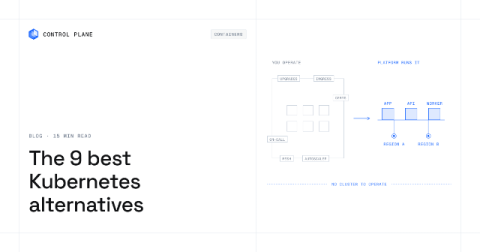
A Kubernetes alternative is a platform that runs containers in production without your team operating Kubernetes clusters. The right one depends on how much reliability you need, whether you stay on one cloud, and whether your stack depends on the Kubernetes API.
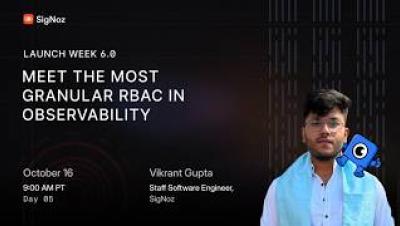
We’ve built one of the most advanced access control models in observability, for every user and agent. Vikrant, who designed and built it, walks through,
Every network team keeps a dashboard backlog. A war room needs a view of one incident. A service owner wants path health for a single application. An executive review needs business impact on one page. Each request becomes a ticket for the tooling team, and the view often arrives after the moment that needed it has passed. Artist is the dashboard agent in Selector Foundry, the agentic NetOps platform built on Selector Analytics.
Large pull requests can be a pain to review. When a change touches dozens of files and adds hundreds of lines of code, reviewers have a lot to work through before they can approve it. And if something needs to change, the whole PR goes through another round of review. Stacked PRs let developers split a large change into smaller, dependent pull requests that can be reviewed separately.
TL;DR Aiven for OpenSearch is where you search logs from every service, with OpenSearch Dashboards included and a built-in integration for Aiven service logs. When several destinations need the same logs, or traffic bursts and mapping changes put logs at risk, put Aiven for Apache Kafka in front: applications write once, Kafka buffers and replays, and sink connectors route logs to OpenSearch, object storage and Aiven for ClickHouse.
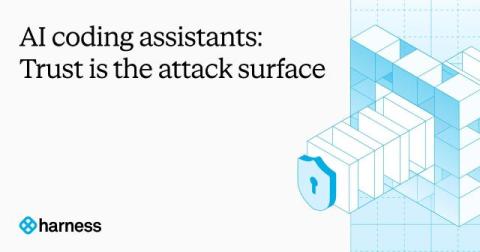
Explore how AI coding agents can be exploited through trusted files, hooks, and MCP tools, and learn how to secure agent workflows against hidden instructions and persistent threats. Why the most dangerous instructions aren't the ones you type into the chat box For the past decade, autocomplete guessed your next line. It was helpful, annoying, or flat-out wrong, depending on the day.
The faster teams deploy, the more releases fail, and burnout climbs right with it. What 700 engineers told Harness about AI-scale delivery. Lenny's Newsletter put out its 2026 tech workforce survey this year, and you should read the whole thing. The headline stats: significant burnout jumped from 44.7% to 55.7% of tech workers in a year. Career optimism dropped from 54.8% to 48.7% over the same period of time.
As an Android developer, you’ll almost always have access to a device. However, when handling hardware, the device that you actually need often happens to be already in use, set up incorrectly, stored in another lab, or simply waiting to be reset. That’s when Android development costs start to increase.
The Australian Medicare AI agent incident highlights a broader shift in cybersecurity. AI does not need to create new vulnerabilities to increase risk. Its ability to continuously discover, test, and pursue existing weaknesses places greater emphasis on maintaining secure configurations over time, not just fixing issues once. Security teams are used to the idea that determined attackers will keep looking for a way in.