Amazon Web Services (AWS) provides a range of managed database services that provide multiple database technologies to handle various use cases. They are designed to free businesses from tasks like database administration, maintenance, upgrades, and backup. AWS databases come in several types to cater to different business needs.
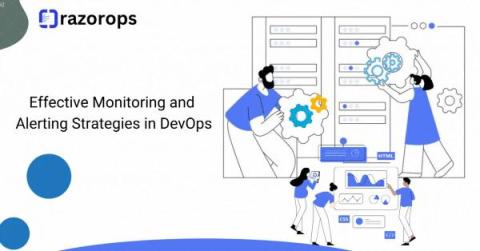
As we approach 2024, the DevOps and SRE landscapes continue to evolve, bringing forth a new generation of tools designed to enhance efficiency, scalability, and reliability in software development and operations. In this post, we'll dive into some of the most promising tools that are shaping the future of Continuous integration and deployment, monitoring and observability, infrastructure/application platforms, incident management & alerting, security, and diagramming.
The most frenzied shopping day of the year – Black Friday – is fast approaching, and businesses around the globe are bracing themselves. However, imagine this – a massive number of eager shoppers ready to snag the hottest deal, and just when your website should be working at its best, it crashes, leaving behind frustrated customers and potential revenue slipping through your virtual fingers. This scenario is not entirely fictional.
In incident management, staying ahead of the curve is crucial, and that's what we're doing with our latest suite of features designed to streamline your workflow and enhance your response capabilities. Furthermore, you have provided numerous excellent suggestions during this period. We value your feedback and invite you to reach out to us at support@ilert.com to share your experiences with ilert.
You’ve done your research and decided to use the DevOps approach for your software development process and IT operations. However, before you start tossing around terms like “continuous integration” and “containerization,” there’s an important starting point on your DevOps journey — creating a DevOps implementation roadmap.
The entire reason we have monitoring is to understand what users are experiencing with an application. Full stop. If the user experience is impacted, sound the alarm and get people out of bed if necessary. All the other telemetry can be used to understand the details of the impact. But lower-level data points no longer have to be the trigger point for alerts.
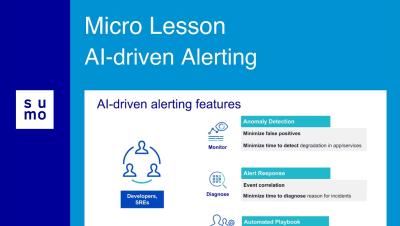
As an ITOps leader, you know managing enterprise IT can be challenging, with its mix of old and new, on-site and cloud-based systems. Closely monitoring each part of the system infrastructure and its many components is a constant struggle, forcing you and your team to juggle non-stop alerts and keep services up and running. How can you stop alert fatigue and gain clarity when alerts are incessant, unclear, and lack the necessary context? The answer lies in intelligent alerts.