Mailchimp
Not subscribed to OpsMatters Newsletter


The job of the IT professional has become more difficult over the past decade. This is not necessarily due to the workload, but because of the dramatic shift we’ve seen in the way our organizations, employees, and customers are now operating in a software-powered world.
First, let me say that I know AWS doesn’t promise anything about network performance as it relates to packets. At best, they leave it as a multivariate calculus problem for the reader — inclusive of CPU performance, code optimization, MTU, and current network congestion under the VLANs. But still, I was curious to see if there was any correlation to Amazon’s published “Network Performance” and the actual packets per second metric I tested.
Joao Grassi — a .NET developer, front-end hobbyist, and friend of Sentry — likes .NET very much and recently tried to bring a friend to the “dark side” of .NET development. To win a point, he decided to create a small sample project using Azure DevOps. As he started, he struggled to find helpful information in the documentation (like how to control the artifact name).
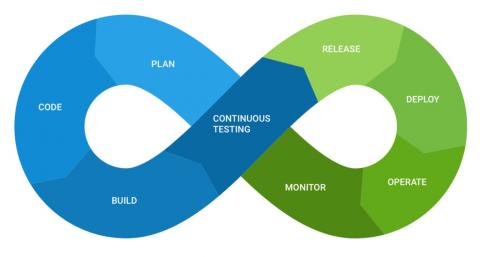
Continuous testing has evolved to become an important phase in modern application development and delivery. When we at Sumo Logic sketched out a plan to start delivering our microservices continuously, we knew we needed to define a delivery pipeline, which would run our automated tests and provide feedback in early phases of development.
Organizations need better network oversight. According to Information Week, recent data predicts “wasted” cloud spending on services and applications that aren’t fully utilized will reach $21 billion by 2021, while CIO points to Gartner research that suggests 30 to 40 percent of IT spending in large enterprises is actually funding shadow IT.