Mailchimp
Not subscribed to OpsMatters Newsletter


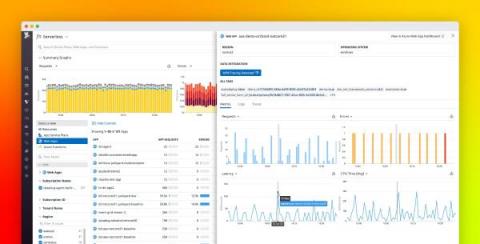
Azure App Service is a platform-as-a-service (PaaS) offering for deploying applications to the cloud without worrying about infrastructure. App Service’s “serverless” approach removes the need to provision or manage the servers that run your applications, which provides flexibility, scalability, and ease of use. However, App Service also introduces infrastructure-like considerations that can impact performance and costs.
Amazon Web Service or AWS has an immense cloud ecosystem now counting at over 200 services and products. Started with first generation services like EC2, S3, and RDS, now you can have satellite control centers, build virtual reality, and compose music using Artificial Intelligence. As the variety of services expanded, the necessity to monitor all those services efficiently became critical. Running a service without a proper monitoring system is no different from running while blind-folded.
We just announced the creation of a new RemoteWrite SDK to support custom metrics from applications using several different languages. This tutorial will give a quick rundown of how to use the Java SDK. This SDK – like the others – is completely free and open source, and is meant to apply to any output destination, not just Logz.io.
When working with CFEngine, it’s common to hear advice about separating data from policy. Separating data from policy allows for separation of concerns, delegation of responsibilities and integration with other tooling. Each organization is different, and a strategy that works well in one environment may not work as well in a similar environment of another organization, so CFEngine looks to provide various generic ways to leverage external data.