Mailchimp
Not subscribed to OpsMatters Newsletter


Hulu, the entertainment streaming platform, needed a solution to scale up its internal application and infrastructure monitoring platform as it grew beyond 1 million metrics per second. The solution it created combines two open source tools— InfluxDB, a time series database, and Kafka, an event-streaming platform. It’s not just global enterprises like Hulu that have access to world-class tools and infrastructure to achieve their business goals.
Imagine this scenario. Your company has been laboring for months on an application and is finally releasing it. Your team has worked out all the potential issues and has created an all-encompassing project, but something is not right. There is an issue, and your team is getting some much-needed R&R. You come the next day and see a ton of irate emails. You have to go back to the drawing boards to figure out what went wrong before you release a fix. What I explained was a nightmare.
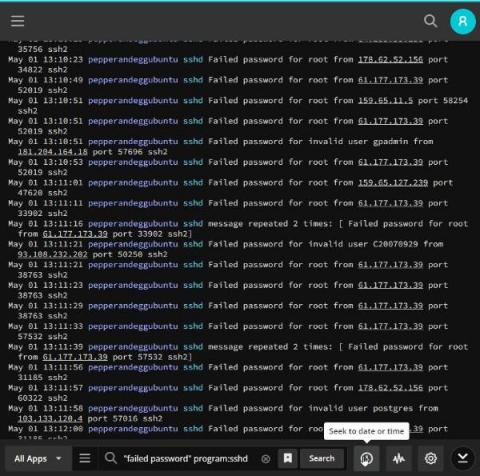
Security can certainly be a broad brush topic. As a software engineer, you design and build to the best of your ability. In delivery methodologies of years gone by, sometimes security can be viewed as an afterthought e.g running security testing last before deploying. Today with the DevSecOps movement, one more set of concerns moves left towards the developer which is now security.
Managing a Kubernetes cluster is a complex endeavor. As demands on a cluster grow, increasing the number of deployed pods can help ease the load on the system. But what do you do when you run out of nodes to host those pods, or when the load decreases and some nodes are no longer needed? Manually adding or removing nodes is possible, but wouldn’t it be better if there was a way to automate that task? Fortunately, that’s exactly what the Kubernetes Autoscaler charm is for!
This blog is the second in a four-part series about how Puppet can help government agencies meet compliance and security requirements. Read the first post here. Zero Trust is a strategy created to combat system intrusions through a “never trust, always verify” model. DevSecOps is a collaborative software development strategy that integrates development, security, and operations practices into a continuously evolving lifecycle.
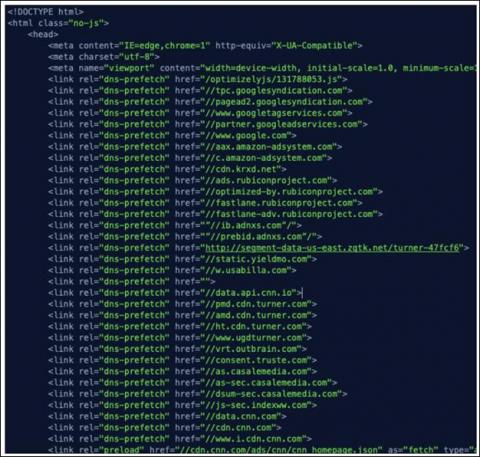
This article helps you understand DNS prefetching, one type of resource hint, including what they are, why and how to use them, and best practices for auditing and scaling them.
In this article, let’s take a look at preconnect resource hints — what they are, why and how to use them, and best practices for auditing and scaling them.
At Pandora FMS we have IT professionals on an altar. Literally, one next to the water dispenser in the office. I’m serious! It even has its blessed liturgical cloth, its flattering parsley, its candles and the incense! But there are still things that these people miss. Here’s a hint: it’s related to ITOM.
Since the beginning of the Internet, the speed of delivering content has been an issue. While processor enhancements, network acceleration, and web frameworks have brought drastic improvements to performance, the goalposts have continued to shift further away; devices operate on wireless connections with limited bandwidth, and the Internet is accessed from every corner of the globe.