Mailchimp
Not subscribed to OpsMatters Newsletter


I used the first two parts of this series to lay out my case for how and why cloud-based networks can effectively “Trojan horse” costs into your networking spend and highlighted some real-world instances I’ve come across in my career. In the third and final installment of this series, I want to focus on ways you can optimize your personnel and cloud infrastructures to prevent or offset some of these novel costs.
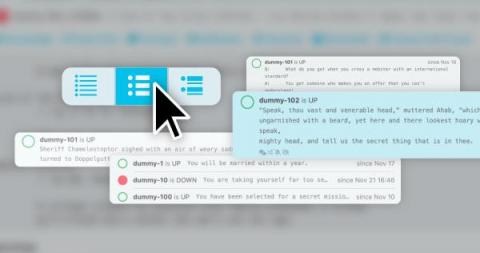
With Icinga DB Web you can now customise Icinga Web’s list views to your needs. While in one scenario you might be more interested to see as many objects as possible at a glance, in another scenario detail attributes of only a few objects will be more important to you. Yet, in the first case, you would even be distracted by more detailed information.
We recently featured in Ecommerce Age. If you missed the write up, you can catch up in full, here… As ecommerce continues to outdo the high street, Black Friday sales are becoming as much of a tradition as Christmas dinners. But shoppers are very influenced by external factors, from the economy to website experiences. We outline the key ecommerce challenges this Black Friday…
Should you leave the cloud? Is cloud migration reversing? Is cloud repatriation a growing trend? On-premises vs. Cloud – which is best? How do you futureproof your IT and protect your business through recession or uncertainty, whether that’s in Cloud or On-prem? Today’s article is about keeping your options open within the context of recent economic and technological trends.
Behind the scenes, nearly every major web service has an API—an “Application Programming Interface”. APIs are bits of code that allow applications to pass data/information back and forth using a system of requests and responses. From booking your flight ticket to checking the weather forecast on your phone, APIs are everywhere.
What’s the ultimate goal of bringing observability into an organization? Is it just to chase down things when they’re broken and not working? Or can it be used to truly enable developers to innovate faster? That’s a topic I recently discussed with David Ostrovsky, a software engineer at Meta, the parent company of social media networks Facebook and Instagram among others. He was my guest on the most recent episode of the OpenObservability Talks podcast.
Devices, developers, applications, and services produce and utilize enormous amounts of JSON data every day. A portion of this data consists of time-stamped events or metrics that are a perfect match for storing and analyzing in InfluxDB. To help developers build the applications of the future, InfluxDB provides several ways to get JSON data into InfluxDB easily.
At Lumigo, we keep improving the coverage and quality of our distributed tracing instrumentation to give you, through Lumigo’s transactions, the most accurate and intuitive representation of how your distributed system behaves. In this blog, we cover a recent development for the Amazon SQS instrumentation in Lumigo’s OpenTelemetry distro for Python, providing a seamless experience for a scenario that otherwise would result in confusing, broken transactions and lost insights.
N+1 queries are the most common problems among developers. N+1 database query problems occur when you have to call the database for N items, and those N items have again N additional data fields which are not in the same table, and those extra N data fields are required for the use case. Generally, this issue is handled at the time of database designing, but every problem cannot be solved efficiently by one solution, some need to be solved by brute force.