Mailchimp
Not subscribed to OpsMatters Newsletter


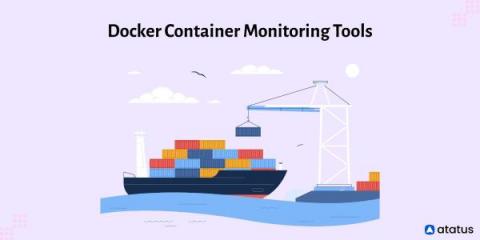
Monitoring tools aid DevOps teams in finding and resolving performance issues more quickly. With the popularity of Kubernetes and Docker continuing to grow, it's critical to establish proper container monitoring and log management practices early on. This is no simple task. Docker container monitoring is quite difficult. Creating a strategy and a suitable monitoring system is not at all easy.
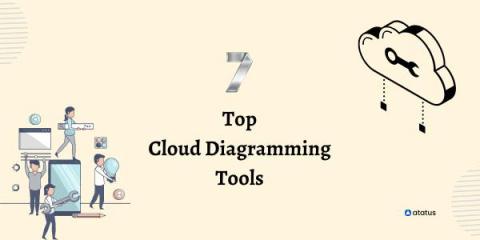
There has been so much uproar about cloud computing in recent years, mostly due to its scalability, capability, and accessibility. Cloud computing is designed to provide constant access to data and applications for users, allowing them to have high bandwidth. Cloud architecture pertains to the diverse components, such as servers, software functionalities, and software solutions, used by all businesses to harness the efficiency of cloud resources.
I recently had a call with a long-term customer who had been using Enterprise Alert for years without any major incidents. But in light of a recent proactive monitoring project, he also revisited Enterprise Alert and reached out to me to ask for my opinion on how he could improve the monitoring of Enterprise Alert from within the solution.
If you’re just getting familiar with full-stack observability and Coralogix and you want to send us your metrics and traces using the new OpenTelemetry Community Demo Application, this blog is here to help you get started. In this simple, step-by-step guide, you will learn how to get telemetry data produced by the OpenTelemetry Demo Webstore into your Coralogix dashboard using Docker on your local machine.
Service mapping is an essential tool for IT service management, as it allows you to gain a clear and comprehensive understanding of the various components and dependencies that make up their IT services. Service mapping focuses on discovering data center devices, infrastructure, application dependencies and the corresponding relationships. This enables your organization to manage and optimize their IT operations, improve service delivery and more effectively reduce disruptions and outages risk.
According to Gartner, the ITOM market is divided into “three mini-suite categories — delivery automation, experience management, and performance analysis.” With business growth becoming reliant on the success of IT operations, managing IT operations to ensure optimal performance, uninterrupted service delivery, and an exceptional user experience is critical for organizations.