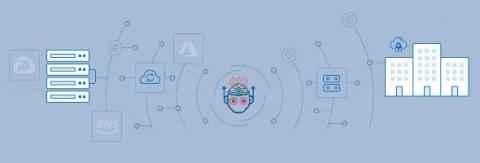
PagerTree Alert Workflow
PagerTree intelligent on-call alert routing gives teams flexible schedules, escalations, & reliable notifications via email, SMS, voice, chatbots, & smartphone app.


Kubernetes and containers are changing how applications are built, deployed and managed. Rancher makes application deployment simple and easily portable regardless of location or infrastructure. At Citrix, we operate on the same core principle. We provide application delivery and load balancing solutions for a high-quality user experience, to any device, across any network, for your web, traditional and cloud-native applications regardless of where they are hosted.
Remember that old commercial from the eighties of the actor Chris Robinson saying “I’m not a doctor, but I play one on TV”? (Yes, I know it’s an old commercial, but the catchphrase has definitely outshone the original product placement.) Well, I would like to start this blog post by changing things up and saying that “I’m not a Database Administrator, but I like to play one on TV!” Or, um, well, at least I like to pretend to be a DBA. Sometimes.
It is finally ready for launch – the first final release v1.0 of Icinga for Windows. The past months were quite challenging: Analyzing, troubleshooting and fixing issues reported by our awesome community and customers: Your support made it possible that we can celebrate the release of our new foundation for Windows monitoring. Scalable. Simplified. Extendable.
Services are the backbone of our systems. Whether they’re functional microservices or logical components of a traditional application, they are the pieces that make up our businesses. We can’t do the computer thing without services. But who’s responsible for owning a service in your company or organization? The cast of characters involved in the lifecycle of a service is more than just software engineers.
In this previous article we learned to create our own Docker images to test and distribute our applications regardless of their dependencies. As we know, Docker is a wonderful tool for collaborative programming work, allowing to work in a virtually identical environment regardless of the operating system you are in.
This blog post is one in an occasional series about how we at Elastic embrace our own technology. The Elastic InfoSec team is responsible for securing Elastic and responding to threats. We use our products everywhere we can — and for more than just logs. By harnessing the power and breadth of capabilities of the Elastic Stack, we are working on tracking risk and performance metrics, threat intelligence, our control framework, and control conformance information within Elastic.
This is the third and final post of a three-part series on understanding kernel extension frameworks for Mac systems. In part 1, we reviewed the existing kernel extension frameworks and the information that these frameworks can provide. In part 2 we covered techniques that could be used in kernel to gather even more details on system events. In this post, we will go into the new EndpointSecurity and SystemExtensions frameworks.
In the past, many organizations grew and managed their own data centers. Some still do. And many are still developing their own automated incident management (aka Autonomous Operations) tools. But as IT grows and becomes evermore complex and fast-moving, the reality of what it means to do so kicks in, and organizations are re-evaluating their strategies.
This blog originally appeared on HPE. Hewlett-Packard Enterprise (HPE) recently invested in OpsRamp. Consider this: when you drive a car, how would you know whether the car needs maintenance? You might look for status indicators like a check engine or change oil light. Similarly, when a pilot flies an airplane, they rely on a multitude of metrics and data to ensure the plane is running smoothly. Managing IT infrastructure is similar in nature.