Operations | Monitoring | ITSM | DevOps | Cloud

A Peek at the Top Tools for API Monitoring

An API allows two systems to communicate with each other. APIs (application programming interfaces) are magnificent things as they connect services and allow us to transfer data back and forth between managed systems. If you manage an API that internal and external users rely on, its failure won’t only impact you. It will affect all users and systems connected to the API. The connectivity and interdependencies create vulnerabilities for application programming interfaces.

Self-Service Analytics for the Shop Floor [Part 2] - A Practical Example using MQTT

In the first part of this blog article, I introduced key concepts surrounding data ingestion for the industrial Internet of Things, the role and importance of metrics and self-services capabilities for shop floor personnel. So let's see how this looks in practice and how the knowledge of a process or control engineer can be turned into action.

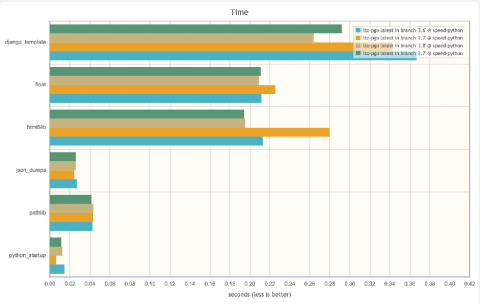
A Comprehensive Guide to Migrating from Python 2 (Legacy Python) to Python 3

Python powers many applications we use in our day-to-day like Reddit, Instagram, Dropbox, and Spotify. The adoption of Python 3 has been a subject of debate in the Python community. While Python 3 has been out for more than a decade now, there wasn’t much incentive to migrate from the stable Python 2.7 in the earlier releases. If you’re still running on legacy python, it’s high time to migrate as it has reached the end of its life since Jan 2020.

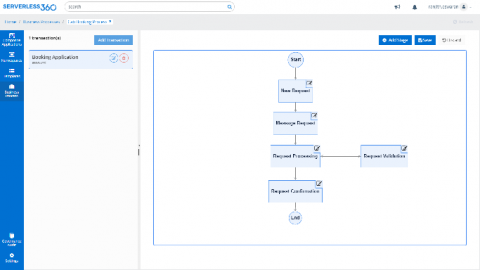
Serverless360 BAM - A Quick Walkthrough

In a real-time business scenario, various Azure services are integrated to define a business process. Day by day these business processes grow in complexity and monitoring them turns out to be a real challenge. In order to overcome these challenges, Serverless360 provides end-to-end tracking via Business Activity Monitoring.

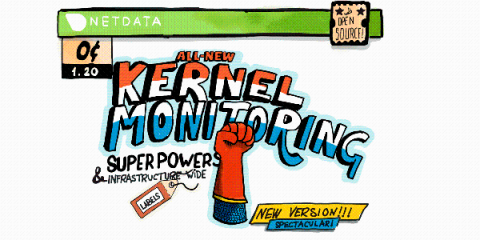
Release 1.20: Kernel monitoring 'superpowers' and infrastructure-wide labels

In Netdata’s first major release of 2020, we’re introducing two new features on the opposite ends of the monitoring spectrum. On one hand, we’re releasing an eBPF collector, which lets you collect, monitor, and visualize incredibly precise metrics straight from the Linux kernel. On the other, we added the ability to label agents to help you organize entire infrastructures and see every important piece of information about streaming nodes in one place.

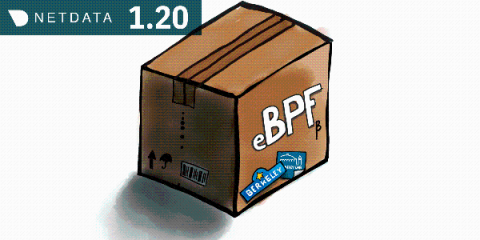
Linux eBPF monitoring with Netdata

Your application isn’t finished when you’ve closed the last if block and you lined up all the brackets. There’s a whole other world of testing, debugging, and optimization that you haven’t even touched yet. To help you more safely step into that complex phase of making your application even better, we’ve just released a brand-new eBPF collector in v1.20 of Netdata.

SIGNL4

SIGNL4 is an out-of-the-box cloud solution that enables operations and business teams to respond faster and more effectively to critical alerts, major incidents and urgent service requests.

Migrating to Azure: made easy with 3 handy tools

We’re delighted to introduce you to guest blogger Gabriel Mora, a Microsoft Certified Azure Administrator who has worked on multiple migration projects using Azure Site Recovery and other third-party tools like Zerto and Movere. By Gabriel Mora Hi everyone, my name is Gabriel Mora and today I will be giving you some tips on migrating to Azure using a few helpful tools.

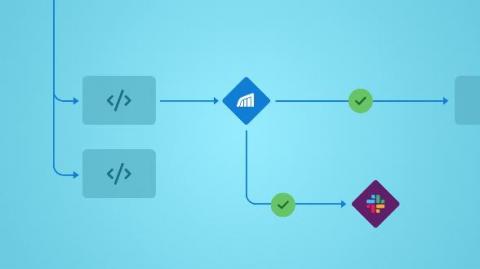
Introducing Notifications API to Automate Notification Settings Across Projects

At Rollbar we love workflow automation. With our new Notifications API, you can automate setting up of custom notification rules for all your Rollbar projects. As more of our customers switch to microservices, we wanted to build a programmatic way to set up these rules for multiple projects or services in just a few seconds, without having to go to the UI.