[Webinar] Ten tips to supercharge your website experience
Learn how you can weed out performance issues in your website and create a superior user-experience.


It’s no secret that COVID-19 is negatively impacting businesses of all sizes in a number of ways. Some more obvious than others. Unless you are in IT, you’re probably not thinking of how COVID-19 can affect the infrastructure security of your organization, but the truth is that as businesses make the tough decision to layoff employees in order to stay in business, basic security hygiene can easily be overlooked.
Reacting to alerts can be a pain, however, there are ways to be proactive and decrease frustration concerning IT Alerting. Developing an alerting strategy saves IT Operations and Development teams time, money, and eliminates notifications from low priority alerts. Keep reading for more information on routing and escalation chains, fielding alerts, and how to communicate an alerting strategy to management.
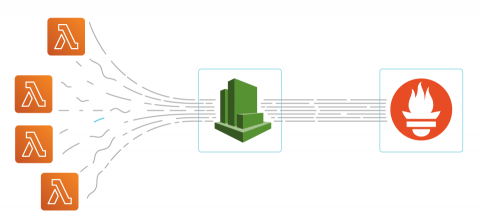
In this post, we will show how it’s easily possible to monitor AWS Lambda with Sysdig Monitor. By leveraging existing Prometheus ingestion with Sysdig, you will be able to monitor serverless services with a single-pane-of-glass approach, giving you the confidence to run these services in production.
Prometheus is a CNCF graduated project for monitoring and alerting. It is one of the most widely used monitoring and alerting tools in the Kubernetes ecosystem. Rancher users can leverage Prometheus quickly by using the built-in monitoring stack. Prometheus stores its metrics as a time series database on the local disk. Prometheus local storage is limited by the size of the disk and amount of metrics it can retain.
In 2019, the Netdata team already knew that a Netdata Cloud solution in the form of an online platform would greatly complement Netdata’s distributed monitoring by making it much easier to organize large infrastructures and by enabling new ways for teams to collaborate. The old node registry available at the time wasn’t enough for Netdata’s users. Building an online platform, even one that does not directly process users’ metrics, is challenging.
Today’s monitoring investments align more often with automation than any other technology. Automation is one of the principal objectives of DevOps to reduce toil, i.e. manual work. This helps keep engineers happy and engaged, allowing for better scale in building and operating applications. Automation typically spans infrastructure and application technologies. The challenge is that many organizations just have too many automation tools.
How many servers can be managed by one system administrator? This question is pretty hard to answer since it depends decisively on the tasks that need to be operated. It is clear, however, that the amount of servers one engineer can manage has increased tremendously over the time, and is still growing. Public and private clouds, in combination with automation tools, enables us to automate many daily tasks. In a modern IT infrastructure almost everything can, and should, be automated.