AlertOps ServiceNow Overview
Provides an overview of the ServiceNow Integration.


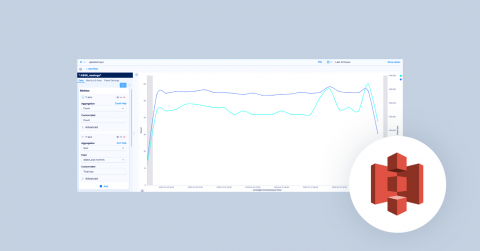
AWS S3 Server Access logs provide detailed records for requests made to S3 buckets. They’re useful for many applications. For example, access log information can be useful in security and access audits. It can also help generate customer insights and better understand your Amazon S3 bill. Coralogix makes it easy to integrate with your S3 server access logs via a Lambda function.
Service Level Objectives or SLOs are one of the fundamental principles of site reliability engineering. We use them to precisely quantify the reliability target we want to achieve in our service. We also use their inverse, error budgets, to make informed decisions about how much risk we can take on at any given time. This lets us determine, for example, whether we can go ahead with a push to production or infrastructure upgrade.
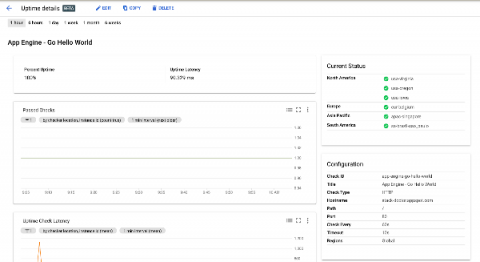
Customers can generate hosted status pages that display the status such as availability, response time and incidents of their services (websites, API, infrastructure) to their own clients or for internal use. All status pages are hosted and maintained by our care. Users point a custom domain to our DNS, and after seconds their page is ready. Hassle free.
I have a coffee mug on my desk that I got from a sales manager many years ago. It’s now filled with pens (I don’t drink coffee), but I take a look at it once in a while. I was starting to think about IT transformation again and noticed a picture of my daughter and an expired AAA card (I might have been thinking AARP) as I looked at that old mug… it reminded me I’m not getting any younger. But it also reminded me of a paradox of culture change.
Feature flags are great and serve us in so many ways. However, we do not love long-lived feature flags. They lead to more complicated code, and when we inevitably default them to be true for all our users, they lead to unused sections of code. In other words, tech debt. How do we stay on top of this? Find out how Honeycomb’s trigger alerts proactively tell you to go ahead and clean up that feature flag tech debt!
Hey, there. This is part six of the Elastic SIEM for home and small business blog series. If you haven’t read the first, second, and third blogs, you may want to before going any further. In the Getting started blog, we created our Elasticsearch Service deployment and started collecting data from one of our computers using Winlogbeat. In the Securing cluster access blog, we secured access to our cluster by restricting privileges for users and Beats.