Operations | Monitoring | ITSM | DevOps | Cloud

Creating a thriving, agile, remote team

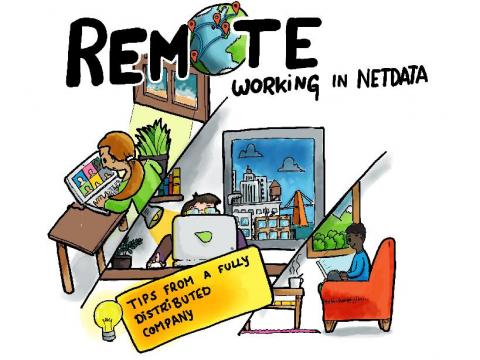
The coronavirus (COVID-19) pandemic has forced many organizations to take unprecedented steps towards remote working. As a fully distributed team, we’ve faced the common challenges of remote work. Based on our experience from our very beginning in 2018, all but a few of these organizations new to remote working will face hurdles to overcome and may try to revert to colocation as soon as possible. Remote working is hard, even when it’s carefully planned and executed.

Logz.io Suppliers Support Plan-COVID-19

We believe that small businesses are the backbone of the local economy and consider our suppliers as partners in our success. Unfortunately, the novel coronavirus/COVID-19 has brought tough times and economic disruption that could significantly change the global economy. So we at Logz.io decided that we can make a meaningful impact by supporting our suppliers and helping them to meet the challenges that this new era brings.

How we're using gossip to improve Cortex and Loki availability

Have you heard about using the hash ring in Loki and Cortex? Here is a short version: In Cortex and Loki, the ring is a space divided by tokens into smaller segments. Each segment belongs to a single “ingester” (component in Cortex and Loki that receives data) and is used to shard series/logs across multiple ingesters. In addition to the tokens, each ingester also has an entry with its ID, address, and the latest heartbeat timestamp updated periodically.

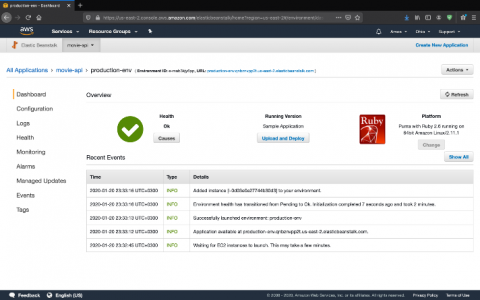
Why and How to Host your Rails 6 App with AWS ElasticBeanstalk and RDS

When you deploy a new Rails app, you typically face a double-bind. If you use an easy platform like Heroku, you could create problems for yourself as your application scales. If you use a more fully-featured platform, you risk wasting time on ops that could be spent on your product. What if you could have both: an easy deployment option that is easy to scale?

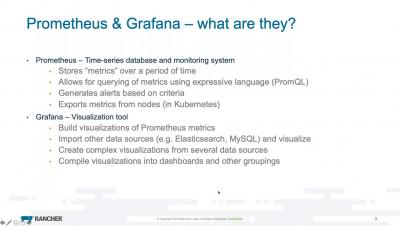
Kubernetes Master Class: Monitoring and Alerting with Prometheus & Grafana

Rancher users and operators can collect custom metrics, automate alerts, notifications, and actions, and create cluster and project-level dashboards. In this class, you'll learn how to setup alerts with Rancher and Prometheus Alert Manager to find problems in your clusters before there's an outage. You'll also learn to visualize metrics for Kubernetes and for your applications so you can gather new insights to your users' usage patterns and your applications' run-time behaviors.

How to deploy and monitor software with speed and confidence using Octopus Deploy and Raygun

In this live demonstration, you’ll witness experts from Octopus and Raygun deploying software into production and monitoring the impact of these changes in real-time. Learn first-hand how to seamlessly configure deployments, identify issues, and track performance gains.

Episode 8: Configuring NGINX with Ansible to Support ASP.NET Core

ASP.NET Core applications have a built-in webserver called Kestrel. This internal webserver is not intended to serve requests directly. It must be placed behind a production quality webserver such as NGINX or IIS. We use Ansible to provision NGINX on our Linux server.

Greater protection for Mattermost message data on mobile devices

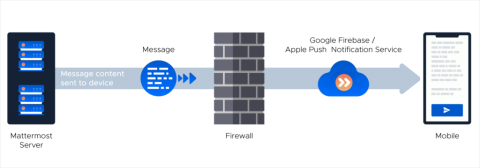
Push notifications are an important aspect of the Mattermost user experience on mobile. When important messages come in, many users like to be notified on their mobile devices so they can respond quickly. Mobile push notifications make it easier for users to stay informed or take faster action while on the go. When it comes to mobile data privacy, many organizations prioritize secure handling of messaging data, particularly when it may contain mission-critical or proprietary information.

Visibility Prevents IT Calamities Sight Unseen

It starts with one call. Then another user opens a ticket reporting sluggish laptop performance. One more call comes in, then a few more similar incidents and service requests. By the time the Help Desk Agent can see the bottom of that first cup of coffee, a bigger problem is evident, but not quite yet visible.

Serverless Continuous Integration in the era of parallelism

As a team that does pure serverless, we place a lot of emphasis on fast deployments. Lately, though, as our codebase has gotten larger, and the number of interactions between the microservices has increased, we have come up against the classic problem of excessively long test execution times in our serverless continuous integration.