Earlier this week, our organization made a big decision. From Monday to Tuesday, Axosoft transitioned from being an in-person company to an entirely remote-based workforce overnight. Our organization’s leadership determined this to be a necessary and preemptive measure in our efforts to minimize effects of the CoronaVirus Pandemic and how it affects our team members. Starting tomorrow, my company, Axosoft, is going all remote until further notice.
This blog will examine how Rancher improves the life of DevOps teams already invested in AWS’s Elastic Kubernetes Service (EKS) but looking to run workloads on-prem, with other cloud providers or, increasingly, at the edge. By reading this blog you will also discover how Rancher helps you escape the undeniable attractions of a vendor monoculture while lowering costs and mitigating risk.
You set up a status page. Your colleagues have already subscribed to it and are getting all the required notifications. Now internally everybody is aware of the status page service. But now there is the next challenge - make people outside of the company aware of it and use it.
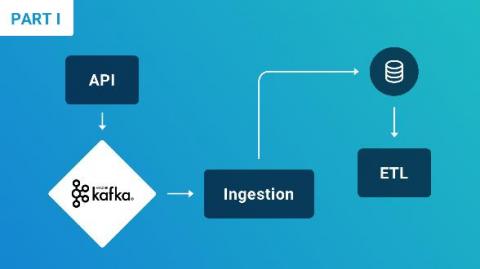
March 10th, 2020 • By Jon de Andrés Frías In this two-part series of blog posts, we’ll explain how Kafka has helped us in removing parts of our architecture that we consider to be “legacy”. During the development of a project sometimes we need to take decisions on our architecture or software design that may not be the best decisions from a pure and perfectionist technical perspective.
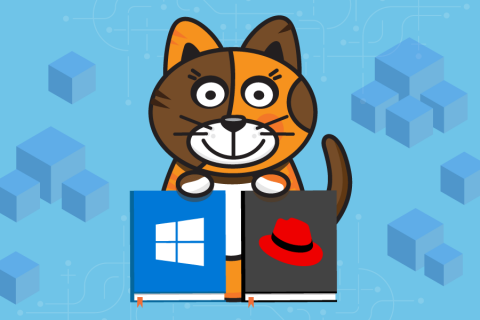
Approximately one year ago, Kubernetes 1.14 made support of Windows containers running on Microsoft Windows Server nodes generally available. This was a declaration that Windows node support was stable, well-tested, and ready for adoption, meaning the vast ecosystem of Windows-based applications could be deployed on the platform.
To round out our series on the serverless open source community, Itay Herskovits, CTO of Funzing.com – a community marketplace for local experiences – picks 10 must-have Serverless Framework plugins. As serverless technology has evolved, a few early-movers have become staples of serverless development. One of these is Serverless Framework, an extensible serverless application management tool that helps you maintain, support, and deploy your serverless code.
Unplanned work is on the rise—and most companies are unprepared for it. That’s according to the recent “State of Unplanned Work Report 2020,” which surveyed 1,316 people across North America and the EMEA and APJ regions. The survey focused on identifying current practices and challenges of responding to customer-impacting technology issues.
“Sociotechnical” — I learned this word from Liz Fong-Jones recently, and it immediately entered my daily lexicon. You know exactly what it means as soon as you hear it, and then you wonder how you ever lived without it. Our systems are sociotechnical systems. This is why technical problems are never just technical problems, and why social problems are never just social problems. I work on a company, Honeycomb, which develops next-gen observability tooling.