Bitbucket Server integration for Jenkins
Find out everything you need to know to install and configure the new Bitbucket Server integration for Jenkins.


One of the most well-known problems when it comes to testing applications is the amount of time required by all test suites. Integration tests, in particular, are usually very slow to execute and depending on the type of application, several minutes (or even hours in extreme cases) are needed in order to get the final execution result. You can reduce the test execution time with several techniques, but one of the most effective methods is running your tests in parallel.
In this article we’ll introduce the AWS Cloud Development Kit and explore how it can boost the productivity of your development and infrastructure teams. Infrastructure-as-Code is fast emerging as a de-facto standard for development organizations.
I’m going to assume most people who read this blog are familiar with PagerDuty. But just in case anyone isn’t, PagerDuty is a tool we use in IT to notify us if some predefined check has failed. Maybe a key process has died or maybe we’re not seeing our expected traffic volume or maybe our server has stopped responding to ping. Whatever it is, PagerDuty will relentlessly, remorselessly, and loudly notify whoever is on call that something needs attention.
The telecom industry has always seemed to navigate well through tech changes. As the industry has evolved, it’s managed to transform from landline to mobile carriers, then from voice calls to messaging and data-centric networks. In many developed markets telcos are creating ecosystems for the data-driven economy. The next frontier is shaping up to be one driven by machine learning (ML) and artificial intelligence (AI).
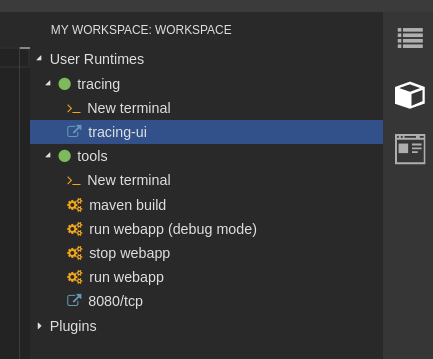
As explained on the Eclipse Che website, “Che brings your Kubernetes application into your development environment and provides an in-browser IDE, allowing you to code, build, test and run applications exactly as they run on production from any machine”. However when deployed in your production environment, those same applications can be monitored using observability tools to understand their performance to help inform future improvements.
OpsRamp was a sponsor of Gartner Symposium in Orlando last week, where CIOs and top executives gathered to share knowledge on the changing role of IT operations, DevOps adoption, and anything to do with cloud migration, monitoring, and management. Gartner analysts and researchers presented on several trends in the world of IT operations, and 10 of them offered key insights into the direction of our industry:
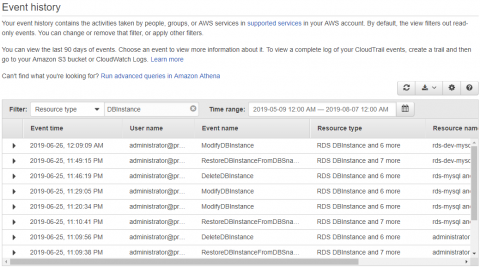
In a recent post, we talked about AWS CloudTrail and saw how CloudTrail can capture histories of every API call made to any resource or service in an AWS account. These event logs can be invaluable for auditing, compliance, and governance. We also saw where CloudTrail logs are saved and how they are structured. Enabling a CloudTrail in your AWS account is only half the task.
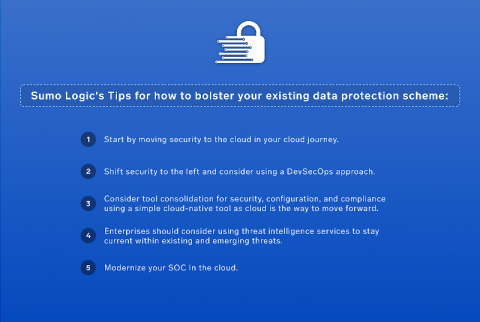
Never before in history has the concept of identity been so vital. To a large extent, everything we rely on to live our lives depends on who we are… or perhaps more accurately, who we can prove ourselves to be. Our data has come to be the standard by which we define ourselves. Because this identity-defining data is online, the protection of our data is of paramount importance.