
INSOCKS for proxy governance quality control and scalable team workflows
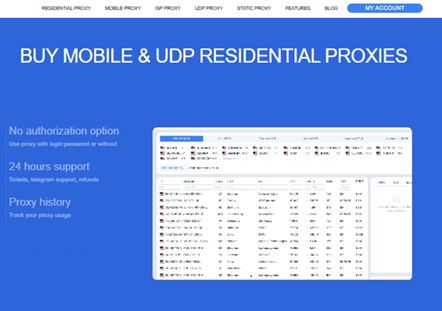
Proxy infrastructure becomes more valuable when it is managed like a governed business resource instead of a one click purchase. For teams that need repeatable buying rules, visible quality signals, and cleaner reporting, INSOCKS can be treated as a platform for proxy governance rather than only a catalog of IP addresses. The service combines product variety, fraud screening, usage history, API access, and support channels in a way that helps teams build internal standards for selection, testing, approval, and renewal. That perspective is especially useful for agencies, SaaS teams, ecommerce operators, and data groups that want fewer ad hoc decisions and more predictable routines. ✨
Why proxy governance matters in real operations
Good proxy infrastructure is rarely judged by price alone once several people or departments start using it. Teams need rules for which proxy type to choose, how to validate IP quality, when to renew access, and how to review what has already been used. Without that structure, the same company can end up paying for duplicate routes, mismatched traffic types, and emergency support that could have been avoided with better planning.
A governance model matters even more when the platform already offers several connection types and flexible billing. INSOCKS lists residential, mobile, static, ISP, and UDP products, while also supporting SOCKS5 and HTTP or HTTPS across the range. That variety is useful, but only when teams apply consistent selection logic instead of treating every task as if it needed the same kind of proxy.
|
Governance need |
INSOCKS feature |
Operational benefit |
|
Fast controlled onboarding |
Instant activation and dashboard setup |
New users can start without long provisioning delays |
|
Safe pre purchase review |
Demo proxies and IP quality checks |
Teams can test before wider spend |
|
Standardized product choice |
Five proxy categories with shared protocol support |
Easier matching of workload to proxy type |
|
Ongoing accountability |
Proxy history and exportable reporting |
Better review for accounting and optimization |
|
Scalable management |
API based proxy management |
Cleaner automation after validation |
|
Budget discipline |
Pay as you go weekly monthly and enterprise plans |
Easier cost control across different teams |
Governance starts before the first purchase
The site says an account can be created in under two minutes, with IP access available within five to ten minutes after account creation. Fast activation is helpful, but from a governance perspective it matters because it shortens the time between planning and controlled testing. A company can therefore establish a rule that no full rollout begins until one small demo or pilot has already passed internal checks. ✅
Product range needs internal rules
INSOCKS presents each proxy category with a distinct workload profile, from residential options for SEO and content verification to static proxies for whitelisted systems and ISP proxies for higher speed scraping. That means teams can build a simple internal matrix instead of asking support the same selection question each time. Once the decision model is written down, a buyer is less likely to force one proxy type onto tasks it was not meant to handle.
How quality control works before scale
Many proxy failures come from scaling too early, not from choosing the wrong provider in absolute terms. A useful platform therefore needs enough signals to support small controlled validation before bigger spending begins. INSOCKS puts unusual emphasis on quality screening and demo access, which makes it a good fit for teams that want a formal approval stage before production use.
This quality control angle matters because proxy procurement is often treated as purely technical while the real cost appears later in blocked sessions, unstable workflows, and weak reporting. The service says every IP goes through fraud score verification, blacklist checks, and reputation review before entering the pool. It also advertises an average fraud score under 15 percent, alongside demo plans for checking speed, IP quality, rotation behavior, and authentication compatibility.
|
Quality check |
Site signal |
Internal use |
|
Reputation screening |
Fraud score verification and blacklist checks |
Approve only cleaner IP pools for sensitive workflows |
|
Live functionality test |
Demo plan with speed and rotation checks |
Confirm the proxy behaves correctly in target tools |
|
Authentication review |
Demo checks include authentication compatibility |
Prevent rollout with mismatched login methods |
|
Rotation suitability |
Product pages and demo behavior show rotation patterns |
Match proxy behavior to the task before scale |
|
Pool health benchmark |
Average fraud score under 15 percent |
Compare acceptable quality threshold across vendors |
Demo first is a strong procurement rule
The site clearly says users can test proxy speed, reliability, rotation, and authentication before making a purchase commitment. For governance, this supports a straightforward rule: any new workflow should begin with a small demo or pilot instead of a full production order. That reduces waste and makes approval evidence based rather than opinion based. ✅
Fraud score matters beyond security language
Low fraud score is not only a technical boast on the homepage. It acts as a shorthand for whether an IP pool is more likely to fit tasks that are sensitive to reputation and automated defenses. A team can use that signal as part of a risk based procurement model, reserving cleaner pools for higher sensitivity work and less demanding pools for simpler data collection.
Building a repeatable rollout process
A structured rollout works better than informal trial and error when several employees or clients depend on one proxy stack. The useful part of the INSOCKS model is that it provides enough visible features to support a staged workflow rather than a single purchase moment. That makes it easier to convert access into a repeatable internal process.
Step one map tasks to proxy families
Start with the real workload instead of the product label. The homepage maps residential proxies to SEO tracking, price monitoring, and content verification, mobile proxies to social media automation and ad verification, static proxies to account management and whitelisted systems, ISP proxies to high speed scraping, and UDP proxies to real time applications. A rollout plan should use those categories as a first assignment layer, not as optional reading after purchase.
Step two define the pilot size
Once the proxy family is chosen, the next decision is how small the first test can be while still producing meaningful feedback. Because INSOCKS offers demo access and starts paid usage from a minimum purchase of five dollars, teams can validate tools and workflows without a large commitment. This supports a good governance habit where every new use case passes through a limited pilot before expansion. ✅
Step three lock in authentication and management
The site highlights secure authentication and API based proxy management as part of its standard offer. That means a rollout should include who owns credentials, how the API will be used, and whether the workflow stays manual during the pilot stage. Secure access rules should be written before more users are added, not after multiple teams have already connected.
Step four monitor usage and export results
Proxy history is one of the most useful governance features on the homepage because it ties access to traceable records and exportable reports. During a pilot, this allows a team to compare success rates, review how often proxies were used, and connect technical usage to cost and compliance review. A rollout becomes much easier to approve when decision makers can see actual usage instead of relying on anecdotes.
Step five scale only after support and billing fit are proven
The site offers pay as you go, weekly, monthly, and enterprise billing, plus API support, 24/7 human help, and an advertised 48 hour money back guarantee. Those features should be tested during the pilot as part of the operational fit, not treated as extras. A vendor becomes stronger for team use when support speed, billing clarity, and refund logic work as cleanly as the proxies themselves. ✨
Informational block for managers and team leads
Managers often need a simpler lens than engineers when evaluating proxy platforms. They usually care about whether the tool is governable, affordable at pilot scale, reviewable later, and safe to assign across departments. INSOCKS offers several signals that answer those management concerns directly.
For agencies handling several clients
Agencies benefit when one dashboard can support several proxy types without requiring a new vendor relationship for every client workflow. The site’s one dashboard approach, proxy history, flexible billing, and support channels make this easier than a fragmented setup. That reduces coordination overhead and improves the chances of enforcing one internal rulebook across client accounts.
For data and SaaS teams
The service explicitly identifies marketers, developers, data teams, SaaS companies, and enterprises as its core audience. For these groups, API access, instant activation, quality screening, and usage reporting are particularly relevant because they support both experimentation and scaling. A governed proxy environment helps these teams move faster without giving up control.
For finance and compliance reviewers
The exportable reporting and proxy history functions matter because they connect technical usage with accounting and review needs. At the same time, the privacy policy and usage rules define what the platform claims to log, store, and prohibit. This combination gives finance and compliance stakeholders a clearer basis for deciding whether proxy usage remains inside acceptable company boundaries. ✅
Practical advice for stronger proxy governance
A platform can only support governance if the team actually follows a few repeatable rules. The homepage and terms provide enough signals to build those rules without inventing everything from scratch. The most effective policies are usually short, visible, and tied to real workload choices rather than generic best practice slogans.
Recommended internal rules
- ✅ Require a demo or small pilot before any new workflow reaches production.
- ✅ Assign proxy families by task type instead of letting every team choose ad hoc.
- ✅ Review fraud score and blacklist screening as part of approval for sensitive use cases.
- ✅ Export usage reports regularly for accounting and optimization review.
- ✅ Use API access only after a manual pilot proves the workflow is stable.
Mistakes worth avoiding
- ❌ Do not treat cheaper entry pricing as a reason to skip validation.
- ❌ Do not let multiple teams share proxies in ways that violate service rules.
- ❌ Do not assume that one proxy category will fit SEO tracking, account work, scraping, and real time traffic equally well.
- ❌ Do not postpone support evaluation until after a large rollout.
Where this platform fits best
INSOCKS is most useful when a business wants proxies to function as a controlled shared resource instead of an informal technical workaround. Its strengths are clearest in environments where product variety, quick testing, history tracking, and billing flexibility all matter at the same time. That makes it a stronger fit for organized teams than for users who only want one temporary IP with no review process.
The strongest advantage of this approach is that it turns proxy access into something measurable and repeatable. Instant activation shortens procurement friction, demo plans reduce risk, fraud screening supports quality thresholds, history supports review, and flexible plans make pilot budgets easier to control. When these features are used together, the platform can support a mature workflow where proxy decisions become part of team governance instead of last minute improvisation. ✨