Operations | Monitoring | ITSM | DevOps | Cloud

Move users to another domain and retain AD Connect sync

We were recently asked for help by one of our clients that needed to separate a number of users from their existing domain by moving them into their own Active Directory forest. This can happen for all sorts of reasons, including divestments, security, geographical or division separation. Whatever the reason, they needed to move these users across into an entirely new AD domain.

How to sync users from a second domain using AD Connect

Do you need to integrate a new company in with your existing employer and therefore in to your already provisioned Azure AD tenant. Or perhaps just need to share your tenancy and office 365 services with more than one company, then you could find yourself in a position where you need to sync users from another domain and have already configured AD Connect, well there is a way to add the second domain to your current Azure tenancy, so you can sync those users from the second domain.

How to Monitor, Manage, and Secure Active Directory

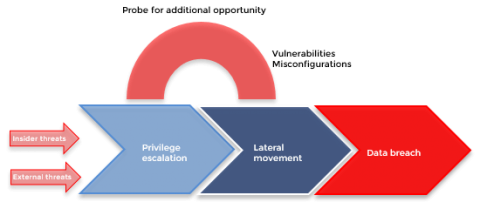
Microsoft Active Directory (AD) is the nerve center enabling your federal agency to access the systems and applications staff members need to do their jobs. AD is also a high-risk target for inside and outside threats and can be a gateway for other potential security vulnerabilities. The key to protecting your agency’s AD is to have the right processes in place to maintain its integrity, know whether something is happening that shouldn’t be, and demonstrate compliance if required.

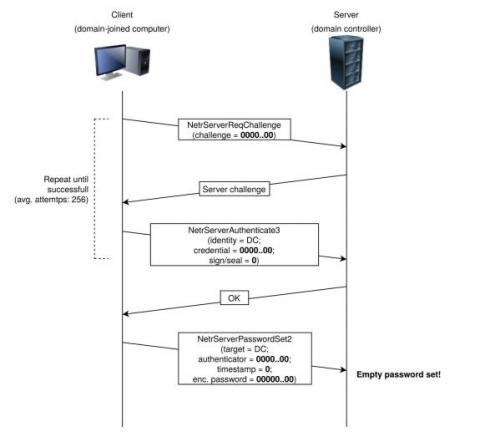
Advanced Active Directory attacks: Simulating domain controller behavior

There was a time when cyberattacks on identity and authentication infrastructures [like Active Directory (AD)] were immensely challenging to perform. A lot of forethought had to be put into devising a plan for the careful execution of attacks, and advanced technical knowledge of domains and networks was a requisite. Over time, with the advent of open-source pen testing tools, the knowledge gap and the complexities involved to carry out a full-scale cyberattack have narrowed drastically.

The LLMNR/NBT-NS strike

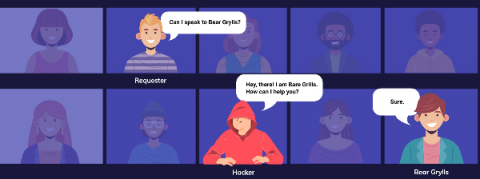
Link-Local Multicast Name Resolution (LLMNR) and NetBIOS Name Service (NBT-NS) are two protocols that are used to identify a host address on a network when the DNS name resolution, which is the conventional method, fails to do so. When a DNS server is unable to resolve a request from a requester machine, the latter broadcasts a message to its peer computers asking for the location of the required server. Hackers leverage this operation to steal the credentials of the requester machine.

Permissions, access rights, and privileges: Active Directory and Azure Active Directory

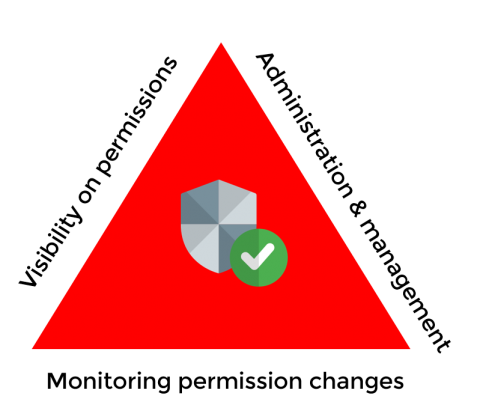
Permissions, access controls, user rights, or privileges define what an identity can see or do in an organization. These terms are often used interchangeably based on context, and essentially perform the same function—granting or denying access to the resources in an enterprise.

Monitoring Applications That Use Azure ADFS

ADFS (Active Directory Federation Services) is a solution from Microsoft for single sign-on (SSO) functionality. It is used by organizations that have their users on Windows Servers to provide authentication and authorization to web-based applications or services outside the organization. ADFS implements federated identity and claim-based access control to authenticate and authorize users, thus maintaining security.