Operations | Monitoring | ITSM | DevOps | Cloud

ITIL 4 High-velocity IT: How High Velocity Organizations Enable Resilience & Anti-fragility

During this period of global crisis and disruption, organizations depend on their IT departments and suppliers to deploy digital collaboration and management platforms at increasing speed while at the same time requiring stable operations, increased availability, and security.
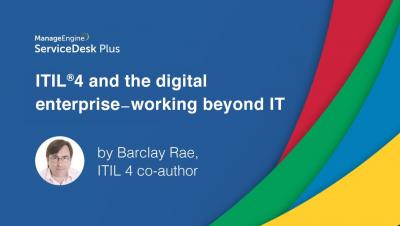

Free ITIL v4 training from ITIL 4 co-author Barclay Rae | ITIL4 implementation in non-IT areas | ESM

Learn about #ITIL4 and #enterpriseservicemanagement from one of the ITIL 4 architects and co-author on how to extend the scope of ITIL 4 beyond IT and best practices to benefit your organization. With the developments in ITIL 4 in recent years, organizations are now appreciating the real meaning of value “co-creation,” and the need for collaboration across organizations. So there is a lot of development and collaborative work taking place to synthesize and integrate work, tasks, and value streams across departments, teams, and functional groups—all well beyond IT.

ITIL Incident Management: Taking a Structured Approach to Incident Resolution

Business continuity has become a key priority for most management teams and their IT associates. Every single minute lost in downtime can result in potentially bloated overheads and reduced revenues. That said and done, no matter how well-engineered the network is, there will be some issues and problems in its due course of operations. ITIL broadly defines an incident as an unplanned incident that interrupts a service or has the potential to interrupt service if not addressed immediately.

How ITIL 4 Guiding Principles Can Boost Communication in Our WFH Reality

ITIL has established itself as the gold standard of guidelines for service management over the years. And with so many employees working remotely this year as a result of the COVID-19 pandemic, the best practices and guiding principles of ITIL 4 are arguably more applicable than ever. The sudden shift to remote work for many organizations has forced teams to increasingly rely on technology and find new ways to convey important messages.

CMDB

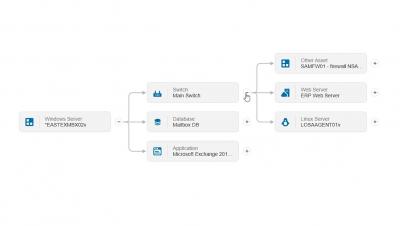
The service desk is full of data that can improve service delivery. Tracking relationships and record history through a configuration management database is a great way to leverage this data. Watch this video to learn more about the visual CMDB in SolarWinds Service Desk and how to maximize it within ITIL practices.

A Beautiful ITSM Union: ITIL and DevOps

Since the launch of ITIL 4, incorporating DevOps into service management strategy has been a hot topic. On the surface, both DevOps and ITIL are frameworks that can help facilitate successful operations surrounding IT services. But that doesn’t mean that IT pros need to choose one or the other. Like most great marriages, it’s how these two methodologies complement each other that makes them an ideal pair when it comes to ITSM.

Better Together: Benefits of Connecting Configuration, Change, and Release Management

Both the technology and infrastructure we use have changed how we deliver services to our customers (or employees in this case). But how are our businesses adapting to these changes? How are we identifying relationships across new environments? Are we understanding the implications of what’s being introduced? In order to keep business applications and operations running smoothly, it’s crucial to understand the value of three key ITIL practices: configuration, change, and release management.

Keeping Your CMDB Up To Date in Distributed Times

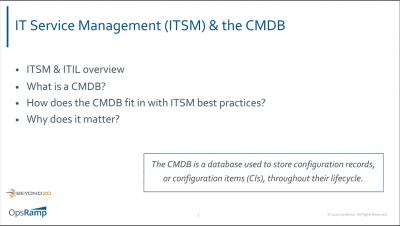
The configuration management database (CMDB) is meant to be a single source of truth to link IT elements with the application processes that underlie the business services. In the age of ITIL, a common repository to store information about your hardware and software assets, made sense. But with today's dynamic and distributed hybrid IT infrastructure, how do you keep your CMDB up to date? Should you even try?

4 Ways to Improve Your Change Management Practices

Okay, good. You have a change management practice in place. You know how to define it, its benefits, how to get the process started, and how to measure its success. You also know it makes for greater success for business initiatives, it prepares the organization for the future, and drives consistency. But how can your current change management practice be improved upon? No matter if you’re a change requestor or change manager, the improvement of your current practice depends on these four actions.

Is ITIL Dead or Alive? Here's the CTO Perspective

Our CTO and Field CTOs spend a substantial amount of their time talking to customers, industry leaders and domain experts, gaining extraordinary insights and subject matter expertise on the most current and burning issues in IT Operations. Listening to them speak at events, webinars, prospect meetings and even as part of random watercooler chats, we always thought it was a shame we didn’t have a platform to share their wisdom on a broader scale.