Operations | Monitoring | ITSM | DevOps | Cloud



Does Observability Throw You for a Loop? Part Two: Close with Controllability
In part one, we introduced the duality of observability, controllability. As a reminder, observability is the ability to infer the internal state of a "machine” from externally exposed signals. Controllability is the ability to control input to direct the internal state to the desired outcome. So observability is a loop problem. And we need to stop treating it as the end state of our challenge in delivering performant, quality experiences to our users and customers.
Adapting to The New Normal in IT Operations
The waves of change are certainly upon us and businesses are being forced to adapt at a record pace. Current world events have caused a jarring shift in all aspects of our lives, accelerating major changes in how we live and work. An unprecedented number of people are now working from home. Those of us working in IT Operations are no exception. Many companies are implementing a Distributed IT Operations Center (D-NOC) approach to address this new reality.

Monitor Apache Flink with Datadog
Apache Flink is an open source framework, written in Java and Scala, for stateful processing of real-time and batch data streams. Flink offers robust libraries and layered APIs for building scalable, event-driven applications for data analytics, data processing, and more. You can run Flink as a standalone cluster or use infrastructure management technologies such as Mesos and Kubernetes.

How Logz io Engineers monitor their multi tenant SaaS offering with Logz io
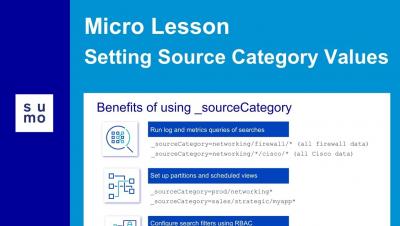
Setting Source Category Values
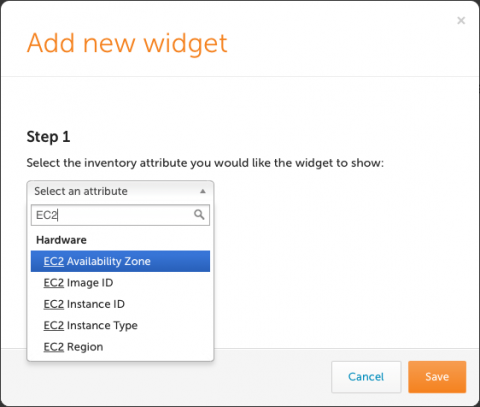
CFEngine 3.12.4 and 3.15.1 released
We are today very excited to bring you new updates to CFEngine. This is a set of patch releases for the CFEngine 3.12 LTS and 3.15 LTS series. We usually release new patch releases every 6 months, but we want to bring new features and all improvements and bug fixes to our users as soon as possible.
Incident Response in the time of Remote Work

Modern shadow IT demands visibility, not control
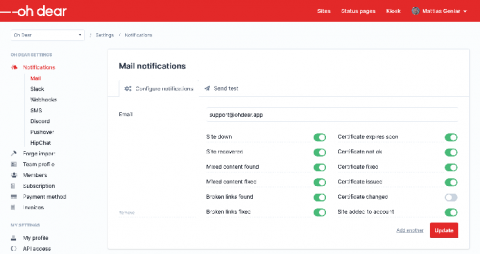
Improvements to our notification system for sending alerts
We added a series of improvements to our notifications settings, making it easier for you to control where your alerts are sent.