The latest News and Information on IT Networks and related technologies.
Cilium is a Container Network Interface (CNI) for securing and load-balancing network traffic in your Kubernetes environment. As a CNI provider, Cilium extends the orchestrator’s existing network capabilities by giving teams more control over how they build their applications and monitor traffic. For example, vanilla Kubernetes installations typically rely on traditional firewalls and Linux-based network utilities like iptables to filter pod-to-pod traffic by an IP address or port.
In Part 1, we looked at some key metrics for monitoring the health and performance of your Cilium-managed Kubernetes clusters and network. In this post, we’ll look at how Hubble enables you to visualize network traffic via a CLI and user interface. But first, we’ll briefly look at Hubble’s underlying infrastructure and how it provides visibility into your environment.
With HAProxy situated in front of their servers, many people leverage it as a frontline component for enabling extra security and observability for their networks. HAProxy provides a way to monitor the number of TCP connections, the rate of HTTP requests, the number of application errors and the like, which you can use to detect anomalous behavior, enforce rate limits, and catch application-related problems early.
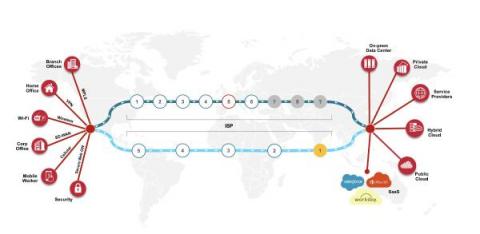
With the latest release of our network monitoring and digital experience monitoring software, we are proud to introduce an industry-first Experience-Driven NetOps solution, taking network visibility to the new enterprise network, expanding beyond the network edge to ISP and cloud providers. The DX NetOps 22.2 release will enable teams to operationalize the new enterprise network, focus on user experience, and avoid chasing utilization spikes.
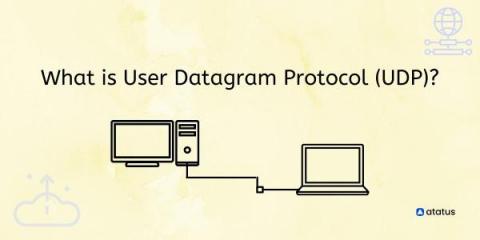
One of the easiest transport layer protocols available in the TCP/IP protocol suite is the User Datagram Protocol (UDP). The communication mechanism involved is minimal. With UDP, neither the receiver nor the sender receives any acknowledgements of packets received. This protocol's shortcoming makes it unreliable and easier to process than many other protocols. Although UDP is considered an unreliable transport protocol, it uses IP services to ensure the best attempts are made to deliver data.