The Dark Ages of IT | SysAdmin Day 2023
Happy SysAdmin Day to all the system administrators out there who keep the workplace up and running.


The latest News and Information on Monitoring for Websites, Applications, APIs, Infrastructure, and other technologies.
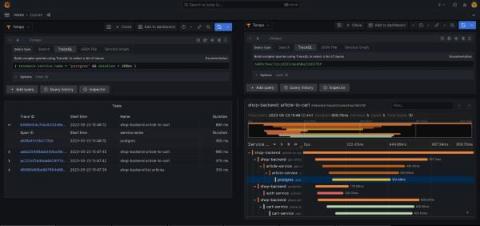
I’ve been working with Grafana Tempo for about half a year now, and one thing I like about it is that Tempo requires only object storage for storing traces, which is easy to set up in both cloud environments and on-premises. Another outstanding feature is TraceQL, which allows searching for relevant traces with a powerful query language.
The process of adding new data to operations and security analytics tools is familiar to admins. New data onboarding can be a tiresome process that takes up too much time and delays getting value from the new data. The process typically begins with the admin engaging the data source owner, getting the wrong data sample, and then having to try again.
Okay, we are back for Part 2! Last time we discussed the new community Python library for InfluxDB 3.0. Let’s talk about a bolt-on application that uses the client library as the core of its development, the InfluxDB 3.0 Python CLI.
Adaptive thresholding is a term used in computer science and — more specifically — across IT Service Intelligence (ITSI), for analyzing historical data to determine key performance indicators (KPIs) in your IT environment. Among other things, it’s used to govern KPI outliers in an effort to foster more meaningful and trusted performance monitoring alerts.
What is Graphite? Simply put, Graphite is an open-source enterprise-ready time-series database. So what is a time-series database? Well, a time series is a series of data points indexed (or listed or graphed) in time order. Time Series databases have excellent benefits over traditional databases in terms of high performance, higher writes, improved scalability, better reliability, and many more.