Graylog Illuminate: The Story
Graylog is an advanced log management system, capable of ingesting all of your corporate logs into a central repository for easy searching and analysis of your data.


The latest News and Information on Log Management, Log Analytics and related technologies.
Graylog is an advanced log management system, capable of ingesting all of your corporate logs into a central repository for easy searching and analysis of your data.
As a cloud project owner, you want your environment to run smoothly and efficiently. At Google Cloud, one of the ways we help you do that is through a family of tools we call Recommenders, which leverage analytics and machine learning to automatically detect issues and present you with optimizations that you can act on.
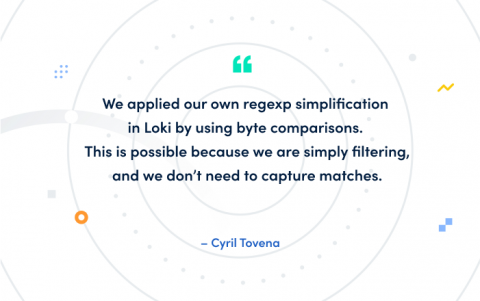
When we graduated Loki into a GA release last year, there were more than 137 contributors who already made more than 1,000 contributions to the project. We also added hosted Loki to the lineup of Grafana Cloud offerings after it proved to be stable internally for our ops cluster, storing 40TB and half a trillion log lines each month. There was, however, one persistent problem that kept surfacing, especially for developers who were writing applications in Go: The regex package was slow.
I’d like to share some of the best practices we’ve learned on our journey to battle performance issues with the Jaeger tracing tool. Some may say we are experts in logging. We log for a living, and have our log analytics service (which we based on open source ELK Stack) to prove it. We’ve mastered logging to the level where debugging and troubleshooting our system is a no-brainer.
The Stack Infra team at Elastic uses many services to provide downloads for projects like Elasticsearch and Kibana to our users. One of these services is Fastly, which helps us optimize delivery to regions around the world. Keeping an eye on the performance and behavior of our CDN is important to ensure we're operating at the level we expect.
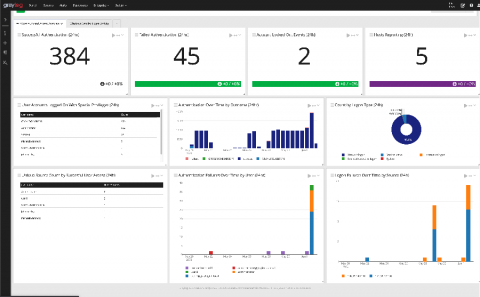
Graylog Illuminate for authentication is a brand new offering designed by our Enterprise Intelligence team. It eliminates the manual setup necessary to detect, monitor, and analyze authentication activities and issues across your IT infrastructure by providing pre-built Dashboards, Alerts, and data enrichment. Initially, Graylog Illuminate for Authentication will address Windows authentication issues and activities. We will release additional data sources in the coming weeks so stay tuned!