Operations | Monitoring | ITSM | DevOps | Cloud

The latest News and Information on Log Management, Log Analytics and related technologies.

Tackling Your Carbon Footprint with the Sustainability Toolkit for Splunk

Simple questions can be overwhelming and not knowing the answer after a mouse click is no longer an option: Sustainability is top of mind for organizations across all verticals and Splunk can help with the power of data. Our upcoming Sustainability Toolkit based on the Splunk platform equips organizations with capabilities to gain deep insights into their carbon footprint and as such empowers them to take the necessary actions towards their carbon neutrality goals.

Use Service Design in Operations Management to Enhance Security

As an IT operations manager, you spend a lot of your time mitigating service outages and service level risks. You worked diligently to get the right people, products, processes, and partners in place to meet your goals. You managed to ensure continued uptime. You’ve reduced the number of tickets and the cost per ticket. And for your efforts, you’re rewarded with managing your company’s cybersecurity program. The problem? You’re not a security specialist.

Log Observer Connect: Leverage the power of Splunk Enterprise data in Splunk Observability Cloud

With Splunk Log Observer Connect it’s easier than ever to correlate all of your metric, trace and log data to deliver better customer experiences! Available now for existing Splunk Enterprise and Splunk Observability Customers. Log Observer Connect lets observability users explore the data they’re already sending to their existing Splunk instances with Splunk Log Observer’s intuitive no-code interface integrated in Splunk Observability, for faster troubleshooting, root-cause analysis and better cross-team collaboration.

How to Use OpenTelemetry to Troubleshoot a Serverless Environment with StackState

Losing track of communication between applications or code has become a problem with the tech world growing more into supporting Serverless cloud architectures and allowing the developer to maintain, upgrade and update these services. One might say that services and code are becoming more loosely coupled, allowing code to run and execute in silos. Let's take an AWS Lambda function as an example.

Slack's New Metrics Storage Engine Challenges Prometheus

Metrics storage engines must be specially engineered to accommodate the quirks of metrics time-series data. Prometheus is probably the most popular metrics storage engine today, powering numerous services including our own Logz.io Infrastructure Monitoring. But Prometheus was not enough for Slack given their web-scale operation. They set out to design a new storage engine that can yield 10x more write throughput, and 3x more read throughput than Prometheus! In February 2022 Suman Karumuri, Sr.

Elasticsearch Release: Roundup of Change in Version 8.1.0

Elastic released a major version of its platform on February 10, 2022. Version 8.0.0 is the latest major version. There has already been a new minor release to version 8.1.0, and there are anticipated minor and patch releases coming as Elastic rolls out new features and fixes. The latest release is the first significant revision since April 2019, when version 7.0.0 was generally available. Users can find a complete list of release notes on the Elastic website.

The Bird is the Word: Getting Up and Running Fast on Humio, by Crowdstrike

I’ve been in the log data analytics space for years, and I have loved seeing the technology and methodologies change and evolve. One of my favorite changes has been the emergence of index-less solutions, and Humio has a great solution here. If you haven’t heard of Humio, you should check out their index-less log management solution for yourself (free up to 16 GB/day too).

The Fellowship of the Stream: Unlock Radical Levels of Choice & Control with Observability Data

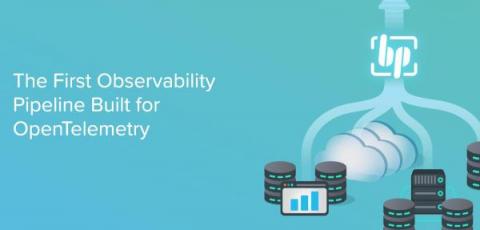
Cribl Stream is a vendor-agnostic observability pipeline that gives you the flexibility to collect, reduce, enrich, normalize, and route data from any source to any destination within your existing data infrastructure. You’ll finally achieve full control of your data, empowering you to choose how to treat your data to best support your business goals..