Operations | Monitoring | ITSM | DevOps | Cloud

The latest News and Information on Log Management, Log Analytics and related technologies.

Best Windows Server Monitoring Tools

Server monitoring involves continuously observing and tracking the performance, availability, and health of servers within an IT infrastructure and is a vital process for organizations aiming to enhance their servers. By conducting server monitoring, with the assistance of server monitoring tools, your organization can detect issues such as hardware failures or software glitches promptly allowing for quick resolutions as server monitoring tools continuously track server health and performance metrics.
What is Log Aggregation? A Complete Guide

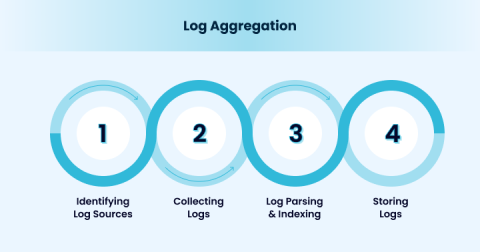
As modern IT infrastructure becomes increasingly complex, businesses generate massive amounts of logs compared to the past in real time. Therefore, streamlining this unstructured log data into a more structured form becomes vital with this growing complexity. Organizations must collect unstructured log data from various sources, extract meaning from them, and store them in a centralized repository. That’s where Log Aggregation comes in.

Elastic Search 8.15: Accessible semantic search with semantic text and reranking

In 8.15, great search results are even more accessible for our customers. Our latest release brings semantic reranking, additional vector search tools, and more third-party model providers and promotes our native Learning to Rank (LTR) to generally available. And now search is more performant than ever with additional speed and efficiency improvements.

Elastic Observability 8.15: AI Assistant, OTel, and log quality enhancements

Elastic Observability 8.15 announces several key capabilities: New and enhanced native OpenTelemetry capabilities: Elastic AI Assistant enhancements: Large language model (LLM) observability for Azure OpenAI: Elastic Observability now provides deep visibility on the usage of the Azure OpenAI Service. The integration includes an out-of-the-box dashboard that summarizes the most relevant aspects of the service usage, including request and error rates, token usage, and chat completion latency.

Applying a Data Engineering Approach to Telemetry Data

The exponential growth of telemetry data presents a significant challenge for organizations, who often overspend on data management without fully capitalizing on its potential value. To unlock the true potential of their telemetry data, organizations must treat it as a valuable enterprise asset, applying rigorous data engineering principles to glean the critical insights and accelerated investigations this data is meant to enable. The telemetry data platform approach democratizes access across disciplines and personas and fosters widespread utilization across the organization.

Event Logs Explained: Your Guide to System Health

Event logs contain critical information and the analysis of these logs will support organizations in the detection of many security incidents, from auditing user access to observing malicious traffic and even isolating monitor rule changes on a firewall. By collecting event logs systematically and analyzing them, organizations can obtain insights into their IT environment for maintaining operational efficiency and security.

Managing Observability Pipeline Chaos

The cloud environment has generated an unprecedented volume of data, making it increasingly difficult for enterprises to manage. With multiple SaaS and cloud-based applications in play, differentiating which data needs processing for analysis versus storage for regulatory compliance is a significant challenge. The growing number of data sources only complicates this further. So, getting clarity and control over this chaos is the goal, without having to overhaul your entire system.

How to integrate Okta logs with Grafana Loki for enhanced SIEM capabilities

Identity providers (IdPs) such as Okta play a crucial role in enterprise environments by providing seamless authentication and authorization experiences for users accessing organizational resources. These interactions generate a massive volume of event logs, containing valuable information like user details, geographical locations, IP addresses, and more. These logs are essential for security teams, especially in operations, because they’re used to detect and respond to incidents effectively.