Rancher is the enterprise computing platform to run Kubernetes on-premises, in the cloud and at the edge. It’s an excellent platform to get started with containers or for those who are struggling to scale up their Kubernetes operations in production. However, in a world increasingly dominated by public infrastructure providers like Google Cloud, it’s reasonable to ask how Rancher adds value to services like Google’s Kubernetes Engine (GKE).
In the midst of a complex and challenging global environment, I’m proud and excited to announce General Availability for Logz.io Infrastructure Monitoring, our new metrics monitoring and analytics solution based on Grafana. Additionally, we’re supporting Early Availability for our new Distributed Tracing offering powered by Jaeger. The release represents a huge next step in our mission to provide the best open source for observability as a fully managed, cost-effective cloud service.
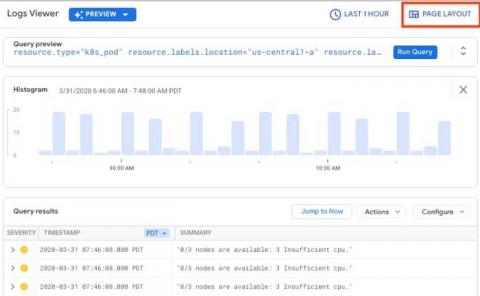
Monitoring your cloud infrastructure is an essential part of making sure your operations are running smoothly. Since announcing the new Cloud Logging interface in February, we’ve heard from users that the new interface is making it faster and easier to meet logging needs, including troubleshooting issues, verifying deployments, and ensuring compliance. One of those users, Arne Claus, is a site reliability engineer at trivago, and has taken advantage of the new interface already.
We've all been there. It's early in the morning and you're jumping on a call. But you forgot it was a video call, and you also forgot to cover your webcam before joining. So now everyone knows you as the person who wears cheetah pajamas and has a serious case of bed head. Not ideal. Luckily practice makes perfect, and with the upcoming weeks of remote working, we gathered a few video call tips from body language expert, Vanessa Van Edwards.
We’ve written about the importance of testing before. If you’re in development, you’re no doubt familiar with agile methodology. But sometimes a test-driven approach seems at odds with going fast. And how do you best communicate the importance of testing to everyone on your team? If you’ve felt frustrated with test-driven development or don’t have buy-in from your team, behavior-driven development is there to help.
There are two ways to test software. The first and most obvious is to simply allow users to test functionality by using the software as it was intended. This is the method likeliest to produce the most useful and practical results. The other method is by automating testing. This requires a second piece of software designed to provide input and analyze output from the original application.