Operations | Monitoring | ITSM | DevOps | Cloud

NGINX Logging Configuration: How to View and Analyze Access and Error Logs

NGINX is one of the most widely used reverse proxy servers, web servers, and load balancers. It has capabilities like TLS offloading, can do health checks for backends, and offers support for HTTP2, gRPC, WebSocket, and most TCP-based protocols. When running a tool like NGINX, which generally sits in front of your applications, it’s important to understand how to debug issues. And because you need to see the logs, you have to understand the different NGINX logging mechanisms.

Why is it so important for MSPs to have zero trust in the digital age?

The pandemic may have accelerated the need for enterprises of all sizes to move towards digital transformation, but the need for cyber security has existed since before. However, with new actors or hackers, malicious software has also evolved and expanded the cyber threats to a larger attack surface. While enterprises need robust digital solutions, implementing them may make your enterprise more vulnerable to security threats.

Tracking On-Call Health

If you have an on-call rotation, you want it to be a healthy one. But this is sort of hard to measure because it has very abstract qualities to it. For example, are you feeling burnt out? Does it feel like you’re supported properly? Is there a sense of impending doom? Do you think everything is under control? Is it clashing with your own private life? Do you feel adequately equipped to deal with the challenges you may be asked to meet? Is there enough room given to recover after incidents?

4 Best Practices for Root Cause Analysis

As failures are a common part of any system’s lifecycle - what would be the Root Cause Analysis for this type of problem? If you build and deploy a system, there are high chances that you'll have to deal with a failure in the near future. However, what matters is how you handle such failures. As an organization, you need to have pre-formulated strategies to handle failures as and when they occur.

We're Joining The Snowflake Partner Network - Bringing Cloud Cost Intelligence

Early on in our journey as a company, CloudZero split with legacy data architecture, migrating to Snowflake and opening up a world of resource flexibility. With the centralized, limitless processing power that Snowflake provided, our team could focus more energy on value-added work, less on managing inefficiencies. With a rapidly expanding customer base, Snowflake allowed us to maintain peak velocity, scaling without running into storage-based slowdowns.

A Layman's Guide To HTTP/2

HTTP stands for Hypertext Transfer Protocol and is the backbone of the World Wide Web. HTTP/2 is the second major version of the HTTP protocol, which offers a performance improvement over its prototype. The new protocol has been in development for a long time, with the first draft published in 2012 and it was finalized in 2015. In recent times, HTTP is the obligation that boards almost all of the networks.

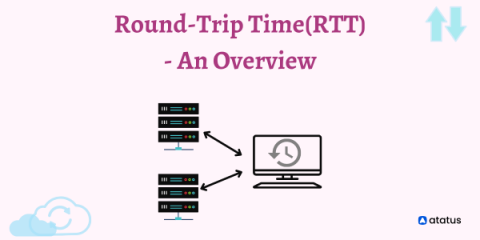
Round-Trip Time (RTT) - An Overview

A notable tool that renders the fortune of a web is Round Trip Time, which is also known as Round Delay Time. The time taken for a network request for a data packet and the flourishing of that data is the round trip time. The duration of RTT is calculated in milliseconds. RTT can be diagnosed and prompted by pinging a specific address. The time takes for an internet request to hit a destination and to lapse back to the primary resource.

From Baud to Awed: The History of the Modem

From 300 baud to multiple gigabits per second, it’s time to celebrate the history of the modem. It occurs to me that we will soon be entering a period where no one will remember the ear-shredding screech of a dial-up modem connecting their computers to the internet—all the while hoping no one picks up the phone and wrecks it. The humble modem is, at least as a device sitting on your desk alongside your computer, largely consigned to history—and more than a few recycling centers.

ServiceNow deepens commitment to hybrid work with new wayfinding technology

Companies shifting to permanent hybrid work environments are up against major challenges, including additional investment in new physical experiences for employees. This is complex and expensive. It involves bringing together systems, technology, and teams that have historically been siloed. But with every challenge comes an incredible opportunity to make work better.

Scaling Grafana Mimir to 500 million active series on customer infrastructure with Grafana Enterprise Metrics

At Grafana Labs, we’ve seen an increasing number of customers who are scraping hundreds of millions of active time series but need a solution to reliably store and query such a huge amount of data. So in March, we announced our new open source TSDB, Grafana Mimir, the most scalable, most performant open source time series database in the world.