Operations | Monitoring | ITSM | DevOps | Cloud

How Can ITSM Integration Help Your Business Right Now?

Integrating your ITSM platform with other third-party apps to sync with one another, sharing data or events that occur in one of them, is called ITSM Integration. By implementing the ITSM strategies, many businesses have realized the need to connect it with other applications and data sources such as HR, customer service, security, and IT. ITSM integration is essential to getting the best out of a potentially complex and disjointed service strategy.

What is the difference between ITSM and ITOM? And how can you use their collaboration to your advantage?

Imagine sitting at a service desk, and your prime responsibility objective is to resolve an incident as quickly and efficiently as possible and retain the customer. But, if you’re running into unavoidable technical issues causing frustration to customers or clients, it’s time to invest in the right tools. That’s where ITSM and ITOM come in, and these play an essential role in the organization’s growth and agility.

How may Infraon assist your company with an effective ITSM integration?

Information Technology Service Management (ITSM) is a set of processes or procedures to provide the best practices to align the IT services with current business needs. These strategies are designed to address and optimize incidents or problems in the organization. ITSM integration connects the ITSM software with other 3rd party applications using Application Programming Interfaces (APIs).

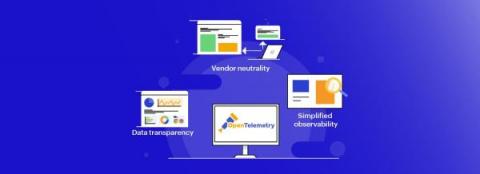
3 key benefits that prove OpenTelemetry is the future of APM

Application performance monitoring (APM) solutions were designed to catch anomalies in an application or website's backend and provide meaningful insights to rectify issues in real time. Lately, though, APM solution providers have been left playing catch-up to be more inclusive of newly emerging technologies and the operational challenges they bring. OpenTelemetry (OTel) simplifies the issues caused by the demands of modern applications.

Logz.io's New Integration with AWS Kinesis: Send Metric Data Without a Single Line of Code

After creating your Logz.io account, the first step for onboarding is to send you log, metric, and trace data. Logz.io makes this flexible – allowing for multiple ways to get data into your Logz.io account depending on your use case and technology stack. Today, we’re excited to announce another easy and fast way to get AWS metric data into Logz.io: by setting up a CloudWatch metrics stream and a Kinesis Firehose.

BIG things are Happening at Graylog!

Did you hear the news? Graylog is on a mission to help make your IT environment and data more efficient and secure by making it super easy to uncover the answers stored in your machine data. At Graylog, coming up with solutions to problems faced by IT and Security professionals is what drives us. Our teams are always working on ways to add meaningful functionality that increases productivity so you can focus your resources on the innovation and core competencies that you’re known for.

The 5 Best AWS Cost Explorer Alternatives In 2022

AWS Cost Explorer is one of the core pillars of AWS cloud financial management. It helps collect resource consumption data and associated cost information across multiple AWS services. Cost Explorer then helps visualize all of this data in one dashboard to ease cost management. You can then analyze, understand, and share cloud cost data with various parties. Cost Explorer is also ideal for companies that have simple cloud billing — and it's free with an AWS subscription.

JFrog Connect: Ready for What's Next for DevSecOps, Edge and IoT

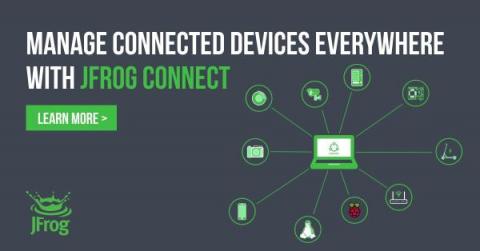
Today at swampUP, our annual DevOps conference, JFrog CTO Yoav Landman unveiled the next step toward making the Liquid Software vision of continuous, secure updates a truly universal reality. We’ve introduced JFrog Connect, a new solution designed to help developers update, manage, monitor, and secure remote Linux & Internet of Things (IoT) devices at scale.

Create FIPS-enabled Ubuntu container images with 10-year security updates

Canonical’s UA and Pro customers can now fully benefit from their subscriptions directly in containerised environments and pipelines. The new UA client release (27.7+) makes it easier to enable FIPS mode in Ubuntu containers. It also automatically signs up CI/CD builds for 10-year security updates to never worry about production container images getting timely patches for high and critical CVEs.