With 34% of cloud developers facing difficulties when calculating how much their cloud provider is going to charge them each month, it is essential to prioritize cloud cost management. This concept surrounds the process of monitoring, controlling, and optimizing an organization’s cloud service spend. By having the correct cloud cost management strategies in place, organizations are able to eliminate unnecessary expenses through optimizing resource allocation and cost-saving strategies.
I’m excited to announce the general availability of the SUSE NeuVector container security platform version 5.1. With the 5.1 release, customers will benefit from more efficient and powerful vulnerability scanning and admission controls across multiple clusters through centralized enterprise scanning, auto-scaling scanners and support for the new Kubernetes (1.25+) pod security admission (PSA) standard. The release also supports the Cilium network plug-in.
As companies start their Kubernetes and cloud-native journey, cloud infrastructures and services grow at a rapid pace. This happens all too often as organizations shift left without thorough controls, which can lead to overallocating and overspending on their Kubernetes environments. Organizations running workloads in the cloud can put budgets at risk when they lack information about key facts.
Cribl places high importance on its core values of Customer First, Always; Together; Curious; Irreverent but Serious, and Transparent. We strive to embody these values every day, and a particular customer issue recently enabled us to exemplify them to that customer. Recently, the Cribl Support, Software Engineering, and Product Management teams worked together with our largest Cribl Cloud customer to resolve throughput issues that arose when integrating Cribl.Cloud with Azure Event Hubs (EH).
As we enter the holiday season, online shopping and payment systems are gearing up for higher traffic and workloads. Ensuring that these applications can handle the increased demand without slowing down or crashing is critical for providing a smooth and efficient experience for customers. One way to improve the performance and reliability of these applications is by using chiselled Ubuntu images in your containerised deployment.
Given the advanced digital age we are in now, a website's uptime and availability determine the success of businesses of all shapes and sizes. There are numerous challenges that each organization must face and overcome to ensure business continuity. One of the top in this list of challenges is website downtime. Your website must always be up so visitors can access it anytime and anywhere. However, if your website is frequently down, it will be tagged as unreliable, which reflects poorly on you.
Repetitive tasks can be time consuming. In an ideal world, automation would remove all of the grunt work when it comes to solving business problems, freeing us up to execute on more strategic decisions. Luckily, Jira has the capabilities to take a load of tasks off your hands – including tracking your issues, posts, features, and more. This blog will walk you through the options available and offer top tips on how to set this up.
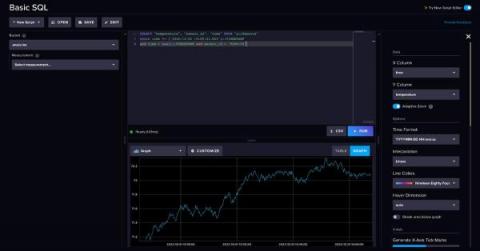
With the release of InfluxDB’s new storage engine for InfluxDB Cloud, InfluxDB Cloud now supports SQL. This is because the updated InfluxDB uses the Apache Arrow DataFusion project as a key building block for its query execution engine. DataFusion’s sophisticated query optimizations support near unlimited cardinality data in InfluxDB Cloud.
The structured nature of Kubernetes enables a repeatable and scalable means of deploying and managing services and applications. This has led to widespread adoption across market verticals for both on-premises and cloud deployment models. The autonomous nature of Kubernetes operation, however, demands comprehensive, fully-converged observability and security. This is uniquely possible today using the Elastic platform.