Operations | Monitoring | ITSM | DevOps | Cloud

Why Redundancy Should Be An Important Part Of Your Multi-Cloud Strategy

For many organisations, multi-cloud has become or is becoming inevitable. After all, it’s unlikely there is a single cloud out there that is able to support all your requirements. More than likely however, is the chance that your business is becoming multi-cloud by stealth. Organisations typically use several, to dozens, to hundreds of Software-as-a-Service (SaaS) products, as well as a handful of Infrastructure-as-a-Service (IaaS) hosting services, and development Platforms-as-a-Service (PaaS).

What Are the Key Features of Asset Infinity's Mobile Helpdesk Solution?

To run a business efficiently, it is particularly important to keep your customers happy. It does not matter how many customers you have, what matters is how good your service is! However, providing the best customer service can be a daunting task. Every customer wants their queries resolved at the earliest. However, it can be a huge problem, especially when there are customers in abundance. This is where a mobile helpdesk solution comes into play.

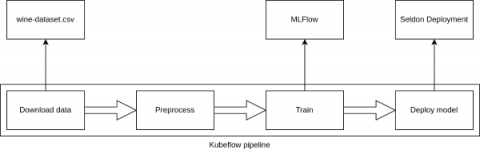
MLOps Pipeline with MLFlow, Seldon Core and Kubeflow

MLOps pipelines are a set of steps that automate the process of creating and maintaining AI/ML models. In other words, Data Scientists create multiple notebooks while building their experiments, and naturally the next step is a transition from experiments to production-ready code. The best way to do this is to build an effective MLOps pipeline. What’s the alternative, I hear you ask? Well, each time you want to create a model, you run your notebooks manually.

Working with Cloudflare to mitigate DDoS attacks

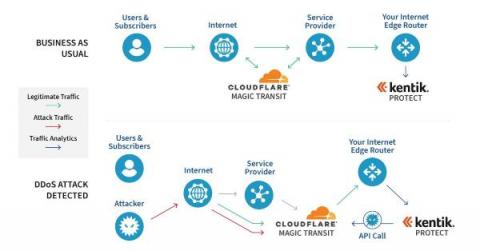
The rolling thunder of cybersecurity warnings has built to a crescendo this year. According to HelpNetSecurity, cybercriminals launched over 9.75 million DDoS attacks in 2022. The Cloudflare Attack Trends 2022 Q1 Report published yesterday shows an alarming increase in application-layer DDoS attacks. And our own Doug Madory has been sharing analysis on the impact of cyberattacks, too.

Build a Cypress tests infrastructure for serverless applications

When a startup is in its very early stages, rapid iteration and dynamism are at the top of its priorities. The ability to do so, while maintaining a stable and high-quality product, is a big challenge facing the R&D group. We want to release features as quickly as possible, but this rapid velocity cane cause conflicts when writing in-depth, comprehensive tests.

10 AWS Cost Reduction Strategies To Implement ASAP

Cloud costs are a daily concern for companies running applications on Amazon Web Services (AWS). This makes sense because many organizations struggle with unexpected AWS charges. Although many organizations have a cloud budget in place, accurately controlling costs is difficult. Real-time cost remediation is often difficult for many, leading to inflated AWS costs every billing cycle. No matter where you are on your cloud journey, reducing AWS costs is something you’ll want to do continuously.

Lights, Camera, Action: Introducing The Fellowship of the Stream

Last week, an article from SiliconAngle came out detailing the challenges facing cybersecurity professionals. Companies are in desperate need of solutions to deal with cloud-native applications that exist in fast-paced environments. The security and IT teams monitoring these applications need scalable and flexible solutions that drive actionable insights. That’s why we built Cribl Stream.

Tackling Your Carbon Footprint with the Sustainability Toolkit for Splunk

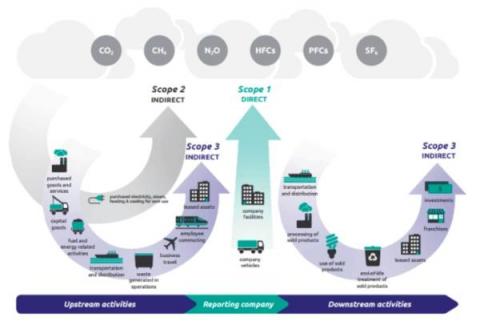
Simple questions can be overwhelming and not knowing the answer after a mouse click is no longer an option: Sustainability is top of mind for organizations across all verticals and Splunk can help with the power of data. Our upcoming Sustainability Toolkit based on the Splunk platform equips organizations with capabilities to gain deep insights into their carbon footprint and as such empowers them to take the necessary actions towards their carbon neutrality goals.

The History of Cloud Native

Cloud native is a term that’s been around for many years but really started gaining traction in 2015 and 2016. This could be attributed to the rise of Docker, which was released a few years prior. Still, many organizations started becoming more aware of the benefits of running their workloads in the cloud. Whether because of cost savings or ease of operations, companies were increasingly looking into whether they should be getting on this “cloud native” trend.