Operations | Monitoring | ITSM | DevOps | Cloud

5 ways to become an effective enabler of IT service management

The business needs of IT Service Management (ITSM) are evolving, and I&O leaders must take sufficient action to position their ITSM practices as an enabler of digital business instead of a bottleneck. A recent Gartner report on the 2022 Strategic Roadmap For IT Service Management states, “By 2024, 80% of ITSM teams that have not adopted an agile approach will find that their ITSM practices are ignored or bypassed.”


Enterprise Service Management: A key ingredient to uninterrupted IT

A never-ending global pandemic and the Great Resignation that shows no sign of slowing down, have made one thing very clear. In order to sustain in a volatile environment such as what’s being witnessed, organizations must level up their IT game to ensure the business runs smoothly and deliver a delightful employee experience every step of the way. To simply put, uninterrupted IT is the need of the hour for unstoppable business.

A killer guide to understanding what to expect from your MSP partner

With the constant shifts in the IT landscape, your IT teams must remain agile and adaptable. While it can be incredibly beneficial for a large organization to have in-house IT talent who can manage your IT infrastructure, many are unaware of how difficult it is to maintain that expertise. Whenever you’re responsible for minimizing the downtime of your business-critical services, you need to consider whether your in-house IT resources are up to the job.

Monitor your Elixir application with OpenTelemetry and SigNoz

OpenTelemetry can be used to instrument your Elixir applications to generate telemetry data. The telemetry data can then be visualized using an observability tool to monitor your Elixir application performance. In this tutorial, we will use OpenTelemetry Elixir libraries to instrument an Elixir application and then visualize it using SigNoz. Somewhere during the lifetime of an application, it's inevitable that it will have some performance issues.
Sponsored Post

The Future of AIOps

According to Insight Partners, the AIOps platform market size is expected to grow from $2.83 billion in 2021 to $19.92 billion by 2028 at a compounded annual growth rate of 32.2%. This skyrocketing growth is fueled by the pace of the IT data deluge getting out of the human hand and the need for resource optimization. Every organization is increasingly producing more IT data, whether in a siloed or unified form.

Updates Paused: How are MSPs Navigating Today's Supply Chain Issues?

The last few years have thrown about everything they could at the status quo. Shifting climates, political instability, and a global pandemic have all contributed to a broad host of network device supply chain issues. Consumers all over the globe are still affected by computer chip shortages and many other items delayed by supply chain issues. And it’s not expected to end anytime soon.

Holiday Import from iCal Files

SIGNL4 offers powerful duty scheduling and time-based overrides for routing alerts to the right people at the right time. With time-based overrides for example, you can apply different alerting workflows during business hours, weekends, holidays, etc. Holidays in general can bring other requirements for signaling and must also be considered separately when planning shifts. You can add and edit holidays manually in SIGNL4 or you can import them from iCal files.

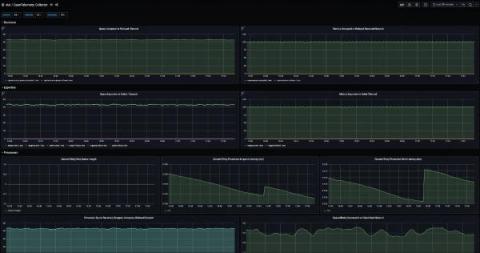
How to collect Prometheus metrics with the OpenTelemetry Collector and Grafana

OpenTelemetry is a set of APIs, SDKs, tooling, and integrations that are designed for the creation and management of telemetry data such as traces, metrics, and logs. One of the main components of OpenTelemetry, or OTel for short, is the OpenTelemetry Collector. The OpenTelemetry Collector, or Otel Collector, is a vendor-agnostic proxy that can receive, process, and export telemetry data.

How Gremlin runs a GameDay

You might be familiar with GameDays at this point. From watching our Introduction to GameDay webinar, viewing our Demo video, and reading our tutorial, you’ve probably learned that GameDays were created with the goal of increasing reliability by purposely creating major failures on a regular basis. Better yet, perhaps your own team has run a GameDay and learned something new about their services’ behavior during failure scenarios.