Operations | Monitoring | ITSM | DevOps | Cloud

How to Prevent Ransomware? A Quick Guide to Protect Your Company Data

Cybersecurity is more important now than ever before. With ransomware and other types of cyberattacks on the rise, it’s crucial to take precautions to protect your data by learning how to prevent ransomware. Ransomware, unfortunately, is one of the ubiquitous scourges on the internet. You’ll have to take every possible measure to protect against it. If you leave things up to chance, you’ll incur severe financial losses or compromise mission-critical information and resources.

What is a Security Operation Center and how do SOC teams work?

With the growing complexity of IT environments, it is essential to have robust security processes that can safeguard IT environments from cyber threats. In this blog, we will explore how security operation centers (SOCs), help you monitor, identify and prevent cyber threats to safeguard your IT environments. This blog covers the following pointers.

The 5Ws (and 1H) of InfluxDB's Native MQTT Collector

MQTT is a messaging protocol used widely in the IoT space. Its publish/subscribe model is ideal for IoT because multiple devices can send data to a single MQTT broker, which MQTT clients can then access. The MQTT integration for InfluxDB’s native collector feature is a fast and easy way to create cloud-to-cloud data pipelines. Here’s the lowdown on using the Native MQTT collector. Who: Users and companies that rely on MQTT to provide time series data for their applications.

Logs Management made available in the latest release, podcasts, office hours & more - SigNal 16

Welcome back to our monthly product updates - SigNal! The latest release of SigNoz is now available with Logs management. You can use SigNoz as your one-stop open source observability solution with logs, metrics, and traces under a single pane of glass. We also participated in podcasts, held office hours, and got featured as one of the top promising startups in the DevOps ecosystem. Let’s see what humans at SigNoz were up to in the month of August 2022!

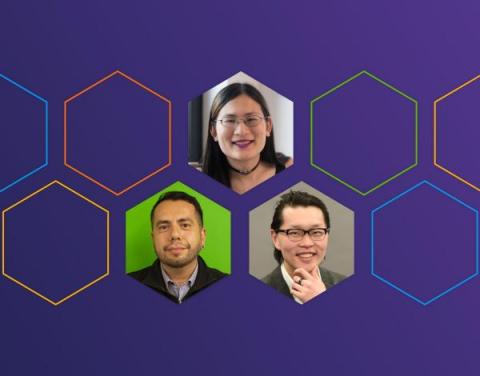
Authors' Cut-No More Pipeline Blues: Accelerate CI/CD with Observability

It’s no secret that CI/CD pipelines make the lives of engineering and operations easier by accelerating the feedback loop for higher quality code and apps. They build code, run tests, and safely deploy new versions of your application. But just like any aspect of development, poor integration, invisible bottlenecks, and bugs can plague your pipelines. And debugging them? Well, it’s complicated.

The Right Car (Or Cloud Service) For Your Family (Or Work) Adventures

Managing gas bills has a lot in common with managing cloud spend. In the summer, our gas bill increased with our summer adventures. Sitting home with the kids out of school and the warm summer months was not an option. Likewise, while discounts on gas certainly help, in reality they do not put much of a dent in the overall bill. The cheapest gallon of gas is still the one not used. If you’re a modern cloud-native business, you can’t just stop using the cloud.

Real World Insights - My Take on the Observability Maturity Model

A prelude to our upcoming six-part Observability Maturity Model Fundamentals blog series. By Lodewijk Bogaards At StackState, we have spent eight years in the monitoring and observability spaces. During this time, we have spoken with countless DevOps engineers, architects, SREs, heads of IT operations and CTOs, and we have heard the same struggles over and over.

JFrog Joins Rust Foundation as Platinum Member

The technology ecosystem is continually evolving but one truth remains, if there is a new and emerging coding language that captures the heart and minds of developers JFrog will be there. JFrog provides a DevOps Platform to store and secure its artifacts while engaging with the community and foundations that support developers using that language. We have a long history of working with Java, Python, C/C++ and more recently Go, Swift and Rust.

The Software Supply Chain Risks You Need to Know

Code that an organization’s developers create is only the beginning of modern software development. In fact, first-party code is likely to be only a small proportion of an application – sometimes as little as 10% of the application’s artifact ecosystem. An enterprise’s software supply chain is made of many parts, from many sources: open source packages, commercial software, infrastructure-as-code (IaC) files, and more.